Professional Tankless Water Heater Installation
High-efficiency tankless water heater installations designed for consistent hot water, energy savings, and long-term reliability.From $3,500
Final pricing depends on unit type, flow rate requirements, venting modifications, permits, and any necessary utility or plumbing upgrades.
- Experienced Plumbers: Our team is made up of certified professionals with years of experience in tankless water heater installation.
- Energy Efficiency Experts: We help you choose and install systems that save you money on energy bills.
- Local Expertise: We know the plumbing needs of homeowners in Clovis, CA, and surrounding areas, so you can trust us to get the job done right.
- Reliable Service: We’re dedicated to delivering exceptional service and ensuring your satisfaction with every project.
- Expert Consultation: Our licensed plumbers will assess your home’s water needs, review your existing plumbing system, and recommend the best tankless water heater model for your home and budget.
- Comprehensive Installation: Our team will handle all aspects of the installation, from removing your old unit (if applicable) to fitting your new tankless system and ensuring it operates efficiently.
- Professional Service: You can count on our team to arrive on time, be respectful of your property, and leave your home in pristine condition after the installation is complete.
- Testing and Calibration: Once your new tankless water heater is installed, we’ll test it to ensure it’s working properly and calibrate it for optimal performance.
- Post-Installation Support: If you have any questions or need assistance after installation, we’re just a call away. We’re here to ensure your new system provides the reliable hot water you expect.
| OK, beyond the basics of showing up on time, doing what he said he was going to do and doing it on time, they offered a free on the phone estimate for multiple jobs and helped me sort through what was needed for what. The invoice was $25 less than the estimate and at the same time pointed out some potential problems to watch out for and when we might need to see him again. I have Clovis Plumbing on speed dial and will be calling again. |
Lanny K.
| Clovis Plumbing Services is a 5-Star business in my opinion! I had a leaky toilet and tried to fix it myself. BIG MISTAKE!! As an amateur, I only made my problem worse. I needed the help of a professional. That’s when I called Tod at Clovis Plumbing Services at nearly 5 p.m. late last week. Not only was he helpful over the phone, but he came out to our home the very next morning to diagnose my plumbing issue. |
Michael A.
See our latest 5-star reviews and project photos on our Google Business Profile.
If you’re ready to upgrade to a tankless water heater or need help with an installation in Clovis, CA, call Clovis Plumbing Services today. Our friendly, professional team is here to provide a free estimate, answer your questions, and schedule your installation.
Table of Contents
Your Guide to Tankless Water Heaters in Clovis
Switching to a tankless system is one of the most significant upgrades you can make to your home’s plumbing infrastructure. For many homeowners, the appeal of endless hot water and improved energy efficiency is compelling. However, moving away from a traditional tank-style system involves more than a simple replacement. It requires a clear understanding of how tankless systems function, how they integrate with your home’s existing plumbing and utility connections, and how regional factors—such as Central Valley water temperatures and household demand—can influence performance.
At Clovis Plumbing Services, we help homeowners evaluate tankless systems within the broader context of their overall plumbing needs. This approach aligns with the standards outlined on our services page, where proper assessment, system compatibility, and professional installation are emphasized across all plumbing work. Homeowners can also reference our Google Business Profile to see how clear communication and thorough planning help ensure upgrades are completed smoothly and with confidence.
Understanding the “On-Demand” Advantage
This guide serves as a comprehensive resource to help you navigate the transition. We will explore the mechanics of “on-demand” heating, compare the long-term value against traditional tanks, and look at the specific logistical requirements for homes in our region. Whether you are dealing with a failing unit or looking to modernize, Clovis Plumbing Services is the expert to call for Clovis tankless water heater installation to ensure the job is done right the first time.
Modern Solutions for Local Neighborhoods
As the population in Clovis continues to grow—particularly in areas like Harlan Ranch or the developing neighborhoods near Loma Vista—the demand for energy-efficient housing has never been higher. Modern families are finding that the old ways of storing 50 gallons of water in a garage—and paying to keep it hot while they are at work or on vacation—simply don’t align with a sustainable lifestyle.
Expert Advice: For those ready to upgrade, Clovis Plumbing Services provides a seamless tankless water heater conversion that replaces your bulky old tank with a sleek, wall-mounted unit.
Protecting Your Investment
This guide breaks down every nuance of the tankless journey, from the first spark of the burner to the decades of maintenance required to protect your investment. In an area with hard water like the Central Valley, specialized care is essential to prevent scale buildup and maintain peak efficiency.
By partnering with a trusted local expert like Clovis Plumbing Services, you can enjoy the peace of mind that comes with a perfectly sized system that meets your family’s peak water demands without wasting a drop of energy.
Pro Tip: Before committing to a specific model, always check the “Minimum Flow Rate.” Some high-capacity units require at least 0.5 gallons per minute to trigger the heater. If you have low-flow faucets, you’ll want a unit with a low activation threshold to ensure you aren’t left with cold water during light use.
Understanding the Fundamentals of Tankless Technology
To appreciate why tankless systems are growing in popularity, you first have to understand the fundamental shift in how they handle water. A traditional water heater is essentially a large, insulated silo. It keeps 40 to 80 gallons of water hot 24 hours a day, regardless of whether you are using it. This results in “standby heat loss,” where energy is constantly used to maintain the temperature of water that sits idle while you sleep or work.
In contrast, a tankless water heater remains idle until you turn on a hot water tap. At that moment, cold water flows into the unit, where a powerful heat exchanger—powered by either gas burners or electric elements—heats the water instantly as it travels through the pipes. This “on-demand” nature is the core of the system’s efficiency.
If you want to dive deeper into the specific mechanics of heat exchangers, flow sensors, and modulating burners, you can learn more about on-demand flow: how water heaters work instantly, to see the engineering behind the magic.
To better understand the internal sequence of events, consider the following steps that occur within seconds of you turning on the shower:
- Flow Detection: A sensor detects that water has begun to move through the system.
- Computer Ignition: The internal control board confirms the flow and ignites the gas burner or activates the electric heating elements.
- Heat Exchange: The water winds through a copper or stainless steel heat exchanger, absorbing heat rapidly.
- Modulation: The unit adjusts the flame height based on the incoming water temperature and the desired output, ensuring no energy is wasted.
- Continuous Supply: As long as the tap is open, the process continues, providing a steady stream of hot water.
The Flow Rate Factor
The most important concept to grasp is “flow rate.” Because there is no stored reservoir of hot water, the capacity of a tankless system is measured by how many gallons per minute (GPM) it can heat at once. In a typical Clovis household, you might have someone showering while the dishwasher is running. Your system must be sized to handle that combined GPM requirement. If the unit is too small, the water won’t be cold, but it might not be as hot as you’ve set it, as the unit struggles to keep up with high demand.
When calculating your GPM needs, consider these common household averages:
- Standard Showerhead: 2.0 to 2.5 GPM
- Low-Flow Showerhead: 1.5 to 1.8 GPM
- Kitchen Faucet: 1.5 to 2.2 GPM
- Bathroom Faucet: 0.5 to 1.5 GPM
- Dishwasher: 1.0 to 2.0 GPM
- Washing Machine: 1.5 to 3.0 GPM
If you live in a multi-generational home in Clovis where three showers might be running simultaneously at 7:00 AM, you are looking at a required flow rate of roughly 7.5 GPM. Most premium residential tankless units can handle between 5 and 11 GPM, but the actual performance depends heavily on the temperature of the water entering your home from the city main.
Pro Tip: Don’t forget the “Delta T.” This is the temperature difference between the cold water entering your home and the hot water you want. In winter, Clovis water can be significantly colder, meaning your unit has to work harder and may produce a slightly lower GPM than it does in the summer.
Tankless vs. Traditional: Making the Comparison
When deciding between a traditional tank and a tankless unit, it helps to look at the long-term “life cycle” of the appliance rather than just the initial purchase price. The debate often centers on convenience versus cost, but for many in the Central Valley, the decision is increasingly driven by space and durability.
Space Savings
In many Clovis homes, especially those in newer developments or older bungalows near Old Town, space is at a premium. A traditional 50-gallon tank takes up about 10 to 15 square feet of floor space. A tankless unit is roughly the size of a carry-on suitcase and mounts to the wall. This allows homeowners to reclaim closet space or clear out a corner of the garage.
Beyond just the footprint, the location flexibility is a major advantage:
- Exterior Mounting: Many gas tankless units are designed for outdoor installation in our climate, freeing up 100% of the indoor space previously occupied by a tank.
- Point-of-Use Options: Smaller tankless units can be installed under a sink or in a small utility closet, perfect for a guest suite or a detached “granny flat.”
- Visual Appeal: A sleek, wall-mounted unit looks significantly more modern and cleaner than a rusted, bulky tank with a messy drain pan.
Longevity and Reliability
A standard tank-style heater typically lasts 8 to 12 years. The constant presence of water inside a metal tank eventually leads to corrosion and sediment buildup, which eventually eats through the lining. Tankless units, because they don’t store water, are much less prone to corrosion. With proper maintenance, a high-quality tankless system can last 20 years or more.
The reliability of a tankless unit also stems from its modular design. In a traditional tank, once the glass lining cracks or the tank begins to leak from the bottom, the entire unit is trash. In a tankless system, almost every component—from the heat exchanger to the control board—can be replaced individually. This makes it a repairable appliance rather than a disposable one.
Energy Efficiency
The Department of Energy estimates that for homes that use 41 gallons or less of hot water daily, tankless water heaters can be 24% to 34% more energy-efficient than conventional storage tank water heaters. Even for high-usage homes, the efficiency gains are significant because you are no longer paying to heat water overnight.
For a side-by-side breakdown of performance, lifespan, and convenience features, check out our detailed analysis of infinite hot water vs. the traditional standby tank.
Consider the “Standby Loss” phenomenon. In a traditional tank, the burner kicks on periodically even when you aren’t home to keep the water at the set temperature. This is essentially paying to heat water for no one. Tankless units eliminate this waste entirely, operating only when there is an active demand for hot water. Over 20 years, these savings can add up to thousands of dollars in reduced gas or electricity bills.
Decision Tip: If you’ve weighed the options and prefer a traditional storage tank system, see our “standard water heater installation services” for a reliable, budget-friendly replacement.
Is Your Clovis Home Ready for an Upgrade?
Not every home is “plug-and-play” for a tankless system. Because these units require a massive burst of energy the moment the water starts flowing, your home’s existing infrastructure may need some adjustments. This is particularly true for older homes in the “Old Town” Clovis area, where gas lines and electrical panels may date back several decades.
Electrical and Gas Requirements
If you are installing a gas tankless unit, you may need a larger gas line. Most traditional tanks use a 1/2-inch line, but many high-capacity tankless units require a 3/4-inch line to provide enough fuel for the high-BTU burners. A traditional tank might use 40,000 BTUs, while a whole-home tankless unit can demand 199,000 BTUs. If the gas line is too small, the unit will starve for fuel, leading to error codes or inconsistent temperatures.
Similarly, electric models require significant space in your breaker panel, often needing two or three dedicated 40-amp circuits. This is a massive load for a residential panel. If your home still has a 100-amp service, an electric tankless heater is likely not feasible without a full panel upgrade to 200 amps.
Venting Considerations
Gas-powered tankless units produce exhaust that must be vented outside. Unlike traditional heaters that can often share a chimney vent with a furnace, tankless units usually require dedicated PVC or stainless steel venting that exits through a side wall or the roof.
There are two main types of venting to consider:
- Non-Condensing Venting: Requires specialized stainless steel (Category III) venting because the exhaust gases are extremely hot. This can be more expensive to install.
- Condensing Venting: Uses a secondary heat exchanger to cool the exhaust, allowing for the use of inexpensive PVC pipe for venting. Most modern, high-efficiency units are condensing models.
Water Quality in the Central Valley
Clovis and the surrounding Fresno County area are known for having “hard” water—water with high mineral content like calcium and magnesium. While hard water affects all heaters, it is particularly tough on tankless units because the minerals can bake onto the heat exchanger, reducing efficiency. We often recommend a water softener or a scale-prevention filter alongside a tankless installation to protect your investment.
When hard water is heated, the minerals precipitate out and form a “scale” or “crust” on the hottest surfaces. In a tankless unit, this is the heat exchanger. If a layer of scale develops, the unit has to burn more gas to heat the water through that crust, which eventually leads to the metal overheating and failing prematurely.
Before you schedule an estimate, it’s helpful to conduct a quick audit of your current utility setup. We’ve put together a checklist of the top signs your home is ready for tankless now to help you identify potential installation hurdles early.
Pro Tip: If you live in an area of Clovis with particularly high mineral content, installing a “Scale-Free” filter cartridge on the cold water inlet of your tankless unit is a cost-effective way to protect the heat exchanger without needing a full-home water softener.
Regional Context: The California Perspective
California has some of the most stringent energy codes in the country, specifically Title 24. These regulations are designed to reduce the state’s carbon footprint and lower energy consumption. For Clovis residents, this often means that tankless heaters are not just a luxury, but a preferred choice for meeting building standards during major renovations or new builds.
The state’s push toward electrification is also a factor. While gas units are still widely available and popular, there are increasing incentives for heat pump water heaters and high-efficiency electric tankless units. Staying ahead of these regulations not only helps the environment but can also increase your home’s resale value in a market that prioritizes “green” features.
Climate Advantages
The climate in Clovis is generally mild, which is a benefit for tankless systems. The “incoming water temperature” (the temperature of the water as it enters your home from the city lines) stays relatively high compared to the freezing temperatures in the mountains. This means the heater doesn’t have to work as hard to reach your desired output temperature, allowing for higher flow rates even in the dead of winter.
In colder climates, a tankless unit might only be able to provide one shower at a time because the incoming water is 35°F. In Clovis, our ground temperature rarely drops that low, usually hovering between 55°F and 65°F. This “head start” allows a Clovis homeowner to get more performance out of the same unit compared to someone living in the Midwest or East Coast.
Utility Costs and Rebates
While California has higher-than-average utility rates, both PG&E and various local municipalities often offer rebates for high-efficiency appliance upgrades. These incentives can significantly offset the initial cost of the unit. Furthermore, federal tax credits under the Inflation Reduction Act can provide even more financial relief for homeowners choosing high-efficiency models.
Many local homeowners ask if the higher upfront investment pays off given our specific local utility rates. You can explore the financial side further by reading “Is a tankless water heater worth it for california homes?“, to see a breakdown of projected savings.
Rebates and incentives often change annually, so it is important to:
- Check the PG&E Marketplace for current “Instant Rebates.”
- Verify if your chosen model is Energy Star certified.
- Consult with a professional about the federal 25C tax credit, which can cover a portion of the installation cost.
Pro Tip: Keep all your receipts and the manufacturer’s certification statement. You will need these documents when filing your taxes to claim any federal energy credits.
Cost Factors: What Determines the Price?
It is no secret that a tankless installation costs more than a traditional tank replacement. However, the “price tag” is made up of several different components. Understanding these costs helps you avoid “sticker shock” when you receive a professional quote.
- The Unit Itself: High-output units capable of running three showers at once cost more than smaller units designed for a one-bathroom home. You are paying for the quality of the heat exchanger (stainless steel vs. copper) and the sophistication of the internal computer.
- Labor and Expertise: Tankless installation is a specialized skill. It involves precision gas plumbing, electrical work, and specialized venting. Unlike a standard tank, which many handymen might attempt, a tankless system requires a technician who understands gas pressures and flow dynamics.
- Retrofitting: If your garage or utility closet needs new gas lines, a new electrical sub-panel, or new venting holes cut through the exterior of the house, the labor costs will increase. This is usually the largest variable in the total price.
- Permits: In Clovis, a plumbing permit is required for a water heater replacement to ensure the unit is safely vented and meets earthquake strapping requirements (even for wall-mounted units). Permit fees vary but are a necessary part of a legal and safe installation.
Beyond the initial installation, you should also consider the total cost of ownership. While you might pay $1,500 more for a tankless system today, the 20-year lifespan and monthly energy savings often result in a lower “per year” cost than buying two traditional tanks over the same period.
For a clearer understanding of why tankless installation plans differ between homes in Clovis, including how factors like venting, fuel setup, and layout affect the work involved, see our breakdown of what changes tankless installation scope in local homes.
Pro Tip: Ask your installer about “condensing” models. While the unit itself is slightly more expensive, the ability to use PVC venting instead of expensive stainless steel can often lead to a lower total installation cost.
Gas vs. Electric: Choosing Your Fuel Source
The choice between gas and electric tankless heaters usually comes down to what is already available in your home. Each has its merits, but in Clovis, the infrastructure of the home usually dictates the winner.
Gas Tankless Heaters
These are the most common in the Clovis area. They generally have higher flow rates and are better suited for larger families. They do, however, require specialized venting and a gas line that can handle the high BTU demand. Gas units are typically preferred for whole-home applications because they can heat water much faster than electric heating elements.
- Pros: High flow rates, lower operating costs (depending on gas prices), works during power outages (if using a small battery backup for the control board).
- Cons: Higher installation complexity due to venting and gas line requirements.
Electric Tankless Heaters
Electric models are often cheaper to purchase and don’t require venting. However, they demand a massive amount of electrical capacity. If your home only has a 100-amp or 150-amp main panel, you might need a panel upgrade to support an electric tankless unit, which can add significant cost to the project. Electric units are often ideal for:
- Small apartments or condos.
- Detached workshops or pool houses.
- Adding hot water to a remote bathroom where running a gas line would be impossible.
Deciding which one fits your lifestyle depends on your household’s peak water usage and your current utility infrastructure. We compare the two in-depth in our article on comparing gas and electric tankless water heaters.
Pro Tip: If you have solar panels with excess production, an electric tankless unit might seem like a “free” way to heat water. However, ensure your inverter can handle the massive “spike” in draw when the unit activates.
Household Usage: Can It Keep Up With a Large Family?
A common myth is that tankless water heaters provide “instant” hot water. In reality, they provide “endless” hot water. You still have to wait for the hot water to travel from the unit to the faucet, but once it arrives, it never runs out.
For large families in Clovis, this is a game-changer. There is no more “waiting for the tank to refill” after the third person finishes their shower. However, the system must be sized correctly. If you have four kids, a dishwasher, and a washing machine all running at 7:00 AM, you need a unit with a high GPM (Gallons Per Minute) rating.
To manage a large family’s needs, we often suggest:
- Staggering Appliances: Setting the dishwasher to run at midnight.
- High-GPM Units: Choosing a 199,000 BTU unit that can support 3-4 simultaneous showers in our climate.
- Recirculation Pumps: Some premium tankless units come with built-in pumps that keep hot water moving through your pipes, so you don’t even have to wait for it to arrive at the tap.
If you’re worried about whether the technology can handle your morning rush, take a look at the pros and cons of tankless water heaters for large households to see how to calculate your peak demand.
Pro Tip: If you have a massive “Roman Tub” or a luxury shower with multiple body jets, you may actually need two tankless units plumbed in parallel. This is a common setup for luxury homes in the Clovis foothills.
Brand Considerations: The Installer’s Perspective
In the world of tankless technology, brand matters. Because these units are complex electronic appliances, you want a brand that has a proven track record, a solid warranty, and readily available replacement parts. Choosing an obscure brand from a big-box store might save money today, but if a proprietary sensor fails five years from now and parts aren’t available in Fresno/Clovis, you’ll be without hot water for weeks.
We typically look for brands that offer:
- High-grade stainless steel heat exchangers: These are more resistant to corrosion and scale than copper.
- Strong local technical support: Brands that have local representatives who can help troubleshoot complex issues.
- Excellent energy factor (EF) ratings: Ensuring you get the most savings for your investment.
- User-friendly digital interfaces for troubleshooting: Units that tell you exactly what is wrong via a clear error code.
Brands like Rinnai, Navien, and Noritz are industry leaders for a reason. They have spent decades refining their “on-demand” technology. For a look at which models we trust most in Central Valley homes, read our list of the best tankless water heater brands (plumber-approved).
When selecting a brand, also look at the warranty:
- Heat Exchanger: Usually 12-15 years.
- Parts: Usually 5 years.
- Labor: Usually 1 year (provided by the installer).
Pro Tip: Navien is often a favorite for Clovis retrofits because their units are designed to use existing 1/2-inch gas lines in many cases, which can save you the cost of upgrading your gas plumbing.
The Installation Process: What to Expect
When you decide to move forward with a professional installation in Clovis, the process generally follows a structured timeline to ensure safety and efficiency. A typical installation takes between 4 to 8 hours, depending on how much retrofitting is required.
1. The Site Assessment
A professional will inspect your current water heater location, measure the distance to the nearest exterior wall for venting, and check your gas meter or electrical panel. They will also look at your water pressure; tankless units require a certain amount of pressure to function correctly, and a failing Pressure Reducing Valve (PRV) could hinder performance.
2. Preparation and Removal
The old tank is drained and hauled away. If the new unit is being moved to a different wall to save space, the plumbing lines are rerouted. This is also the time when the technician will ensure the wall is reinforced to hold the weight of the unit (though they are light, they must be securely mounted to studs).
3. Mounting and Connections
The tankless unit is mounted to the wall. Gas lines are upgraded if necessary, and water lines are connected using “service valves.” These valves are crucial because they allow the unit to be flushed during annual maintenance. They consist of a set of T-junctions with shut-off valves that allow a technician to isolate the unit from the rest of the house.
4. Venting and Finishing
The exhaust system is installed, ensuring it meets all local Clovis building codes regarding distance from windows and doors. The unit is then commissioned, calibrated, and tested for proper flow and temperature. The technician should walk you through how to use the digital controller to adjust your temperature and how to read any error codes.
Pro Tip: Clear a path to your water heater and move any stored items at least 5 feet away before the plumber arrives. This speeds up the job and protects your belongings from dust during the drilling and mounting phase.
Long-Term Ownership: Maintenance and Repairs
A tankless water heater is a precision machine. To keep it running for 20 years, it requires a small amount of annual care. Unlike a traditional tank, which is often “set it and forget it” until it dies, a tankless unit rewards proactive owners with incredible longevity.
Flushing for Scale
As mentioned earlier, Clovis water can be hard. Over time, calcium builds up inside the narrow passages of the heat exchanger. Once a year, a professional should circulate a food-grade descaling solution through the unit to dissolve this buildup. This maintains the unit’s efficiency and prevents the heat exchanger from overheating.
The flushing process involves:
- Closing the service valves to isolate the heater.
- Connecting a pump and hoses to the service ports.
- Circulating a mixture of virgin white vinegar or a professional descaling solution for 45 to 60 minutes.
- Cleaning the “inlet filter” screen which catches larger sediment from the city lines.
Troubleshooting
Unlike a tank, which usually just starts leaking when it fails, a tankless unit has an onboard computer. If something is wrong—like a blocked vent or a dirty flame sensor—the unit will display an error code. This makes repairs much more precise and often faster.
Common error codes often relate to:
- Ignition Failure: Usually a gas supply issue or a dirty igniter.
- Exhaust Obstruction: Sometimes caused by a bird’s nest or debris in the vent pipe.
- Fan Motor Issues: The internal blower that moves exhaust might need cleaning or replacement.
To ensure your system stays under warranty and runs efficiently, it’s important to stay on top of regular service. You can find more information about local upkeep and support at tankless water heater maintenance & repairs near you.
By understanding these components, Clovis homeowners can enjoy the benefits of modern technology while avoiding the pitfalls of neglect. A tankless system is an investment in your home’s future, providing comfort, efficiency, and a touch of modern luxury to your daily routine.
Pro Tip: Many homeowners set a recurring calendar reminder for their “Annual Flush” on the anniversary of the installation. Consistent maintenance is the single biggest factor in reaching that 20-year lifespan.
FAQs About Tankless Water Heater Installation
How long does it take to install a tankless water heater?
A standard tankless water heater installation typically takes between four and eight hours if replacing an existing tank model. The process involves running new gas or electrical lines, installing new venting, and mounting the unit. More complex jobs, like converting from electric to gas, may require a full day to ensure all connections are done safely and correctly.
Are tankless water heaters truly more energy efficient?
Yes. Tankless units only heat water when you need it, unlike traditional tanks that continuously heat and store water. This on-demand heating eliminates standby heat loss, saving energy and lowering your monthly utility costs over time. The increased efficiency is a major reason many homeowners choose to upgrade to tankless technology in Clovis CA.
Does installing a tankless heater require special venting?
Yes. Tankless gas water heaters produce exhaust that requires specialized venting, which is usually stainless steel or specific plastic piping. We ensure the venting is correctly sized and routed out of your home to prevent any safety hazards. Proper venting is a crucial step in the installation process and ensures the unit operates safely.
Can a single tankless unit heat my entire home’s water?
Yes. A single high-capacity tankless water heater is capable of supplying sufficient hot water for an average-sized home, even during peak demand times like running a dishwasher and a shower simultaneously. We always calculate your home’s exact hot water flow rate needs before installation to recommend the appropriate size unit.
Can I install a tankless heater outside my house?
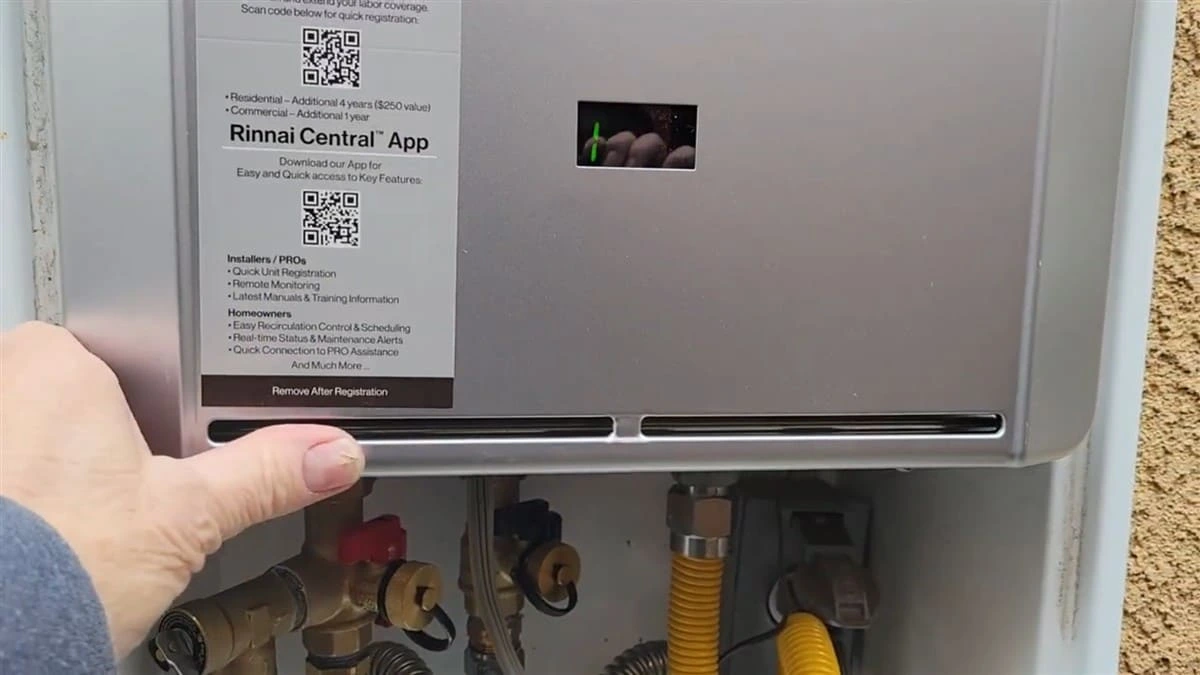
Yes. Tankless water heaters are available in specific outdoor models that are designed to withstand varying weather conditions. An outdoor installation saves space inside your home and does not require complex venting inside. We assess the best location for the unit to ensure easy maintenance and protection from the elements.
Is the water output of a tankless system immediate?
No. While the tankless unit heats water instantly, there is still a short delay as the hot water travels through the pipes from the heater to your faucet or shower. This time delay is similar to a tank-style heater. The main advantage is that the hot water stream does not run out once it reaches the fixture.