Tankless water heaters heat water as it is needed instead of storing a supply of hot water in a tank. When a faucet, shower, or appliance calls for hot water, the system detects the flow, activates its heating source, and heats the water as it passes through the unit. When the demand stops, the heating cycle ends until hot water is needed again.
That on-demand design changes how hot water is produced and delivered throughout a home. Instead of relying on a fixed volume of stored hot water and waiting for a tank to recover after heavy use, a properly sized tankless system can continue producing hot water as long as demand remains within the unit’s capacity.
But tankless does not mean unlimited capacity or instant hot water at every fixture. Performance depends on factors such as simultaneous water use, flow rate, incoming water temperature, fuel source, and the amount of heat the unit can produce. Gas supply, electrical capacity, venting, plumbing configuration, and equipment location can also affect which system is appropriate for a particular home.
Understanding how tankless water heaters work makes it easier to evaluate these factors before choosing equipment or planning an installation. For homeowners considering a switch from a conventional tank water heater, the process starts with understanding what happens inside the unit each time hot water is turned on.
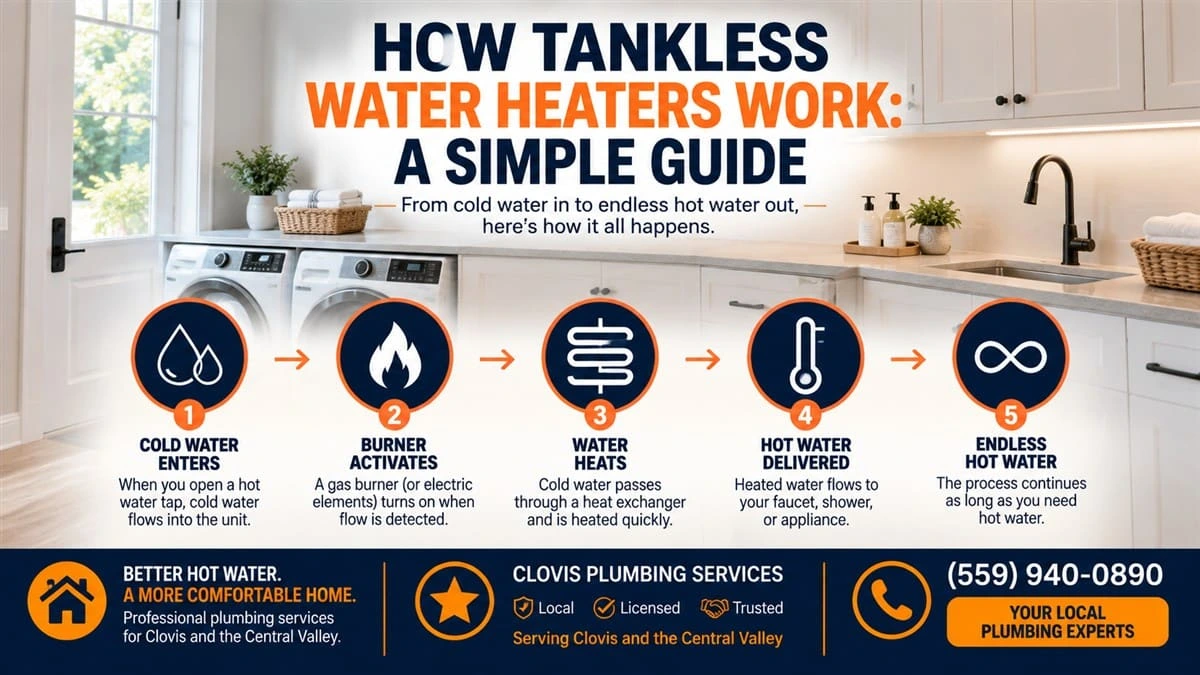
Table of Contents
What “Tankless” Really Means
A traditional water heater stores a supply of heated water, commonly in a 40- or 50-gallon tank. A tankless water heater eliminates that storage reservoir. Instead, the basic process works like this:
- A hot water fixture is opened
- Cold water begins flowing through the tankless unit
- A sensor detects the water flow
- The heating system activates
- Water is heated as it passes through the unit
- Heated water travels through the home’s plumbing to the fixture
- The heating system shuts down when hot water demand ends
Because there is no tank of heated water waiting to be used, a tankless system operates very differently from a conventional storage water heater. For homeowners deciding between the two designs, our guide to tankless vs. traditional water heaters explains the differences in hot-water delivery, capacity, efficiency, and everyday use.
Step-by-Step: What Happens When You Turn on Hot Water
Several things happen inside a tankless water heater each time hot water is requested.
1. A Hot Water Fixture Opens
Turning on a shower, faucet, or hot-water appliance creates water flow through the plumbing system, and cold water entering the tankless heater passes through a flow sensor.
2. The System Detects Water Flow
Once the flow reaches the unit’s activation threshold, the controls recognize that hot water is needed and activate the system’s heating source.
3. The Water Heater Produces Heat
How the heat is produced depends on the type of tankless system. A gas tankless water heater uses a burner and heat exchanger, while an electric tankless water heater uses electric resistance heating elements. Both accomplish the same basic task, but their utility and installation requirements can be substantially different. Our guide to gas vs. electric tankless water heaters explains those differences in greater detail.
4. Water Passes Through the Heat Exchanger
As cold water moves through the unit, heat is transferred into the water. The system monitors operating conditions and adjusts its heating output to deliver water near the selected temperature while demand continues.
5. Heated Water Travels to the Fixture
The heated water leaves the tankless unit and travels through the home’s hot-water piping to the open fixture. As long as sufficient water continues flowing through the heater, the system continues producing hot water.
6. The Heating Cycle Ends
When the faucet or other fixture is closed, water flow stops. The tankless unit detects that hot water is no longer being requested and shuts down its heating operation until the next demand.
Tankless Water Heaters Use Flow Instead of Storage
The easiest way to understand the difference between tank and tankless water heaters is to think in terms of storage versus flow. A conventional tank water heater has a limited quantity of heated water available at any given time. Heavy use can deplete that supply, after which the heater needs time to recover.
A tankless water heater does not depend on stored capacity. Instead, its limitation is how much water it can heat while that water is flowing through the unit. This is why tankless systems are often described as providing continuous or endless hot water: they can continue producing hot water without waiting for a storage tank to recover, provided the demand remains within the unit’s heating capacity.
Flow Rate and Temperature Rise Matter
Tankless water heaters must be sized for the amount of hot water a household may use at the same time. A shower, kitchen faucet, washing machine, dishwasher, or second shower can each contribute to the total demand placed on the heater. For example, one shower operating by itself creates considerably less demand than two showers and another hot-water fixture operating simultaneously.
The tankless heater must also raise incoming cold water to the desired outlet temperature. The greater that temperature increase, the more heating capacity is required for a given flow rate, which means selecting a tankless system involves more than simply choosing a unit with a high gallons-per-minute rating.
Why Simultaneous Demand Matters
Household size alone does not determine the correct tankless capacity because how a household uses hot water matters just as much. A larger household where showers and appliances are frequently used at the same time may require substantially more capacity than a household where hot-water use is spread throughout the day.
Our guide to tankless water heaters for large families explains how simultaneous demand affects sizing and system performance.
Does Tankless Mean Instant Hot Water?
Not necessarily. A tankless water heater begins heating water after it detects sufficient flow, but that does not mean heated water instantly appears at the faucet. Water still has to travel through the plumbing between the heater and the fixture.
The waiting time can depend on:
- Distance from the water heater to the fixture
- Pipe diameter
- Plumbing configuration
- Water flow rate
- The volume of cooled water already sitting in the piping
A bathroom located far from the water heater can therefore have a noticeable wait for hot water even when the home has a tankless system.
What About Hot-Water Recirculation?
Some tankless systems support built-in or external recirculation configurations designed to reduce the wait for hot water at fixtures. Whether recirculation is appropriate depends on the equipment and the home’s plumbing layout, so it should be considered as part of system design rather than assuming that installing a tankless heater alone will eliminate hot-water wait times.
Why Tankless Water Heaters Can Use Less Energy
Traditional tank water heaters maintain a stored supply of heated water. As that stored water loses heat, the heater periodically uses additional energy to bring it back to the selected temperature. Tankless systems avoid maintaining a large reservoir of heated water and instead use energy primarily when hot water is being produced.
Actual energy consumption and potential savings still depend on several factors, including:
- Household hot-water usage
- Fuel type
- Equipment efficiency
- Incoming water temperature
- System sizing
- Installation conditions
- Maintenance
Tankless does not automatically mean lower operating costs in every home, but eliminating the need to continuously maintain a tank of hot water is an important part of how these systems can improve water-heating efficiency.
Tankless Water Heaters Still Need Maintenance
A tankless system does not have a storage tank, but water still passes through internal components where mineral deposits can accumulate. Scale can develop inside the heat exchanger and water passages over time, and excessive buildup can interfere with water flow and heat transfer and may affect system performance.
Depending on the equipment, water conditions, and manufacturer requirements, maintenance may include:
- Flushing the system
- Removing mineral buildup
- Cleaning or inspecting applicable filters
- Inspecting components and connections
- Checking for operating or diagnostic issues
Our tankless water heater maintenance guide explains why routine service is important and what homeowners should know about maintaining these systems.
Why Proper Sizing and Installation Matter
A tankless water heater must produce substantial heat while water is actively flowing through a relatively compact appliance, which makes proper equipment selection and installation particularly important.
Depending on the type of unit and the home’s existing infrastructure, installation can involve evaluating:
- Hot-water demand
- Required flow capacity
- Gas supply
- Electrical capacity
- Venting
- Water connections
- Condensate drainage
- Equipment location
- Recirculation options
A tankless conversion is therefore not always a direct replacement for a conventional tank water heater. Some homes may already have much of the required infrastructure, while others may require changes before the selected equipment can be properly installed.
When Professional Guidance Makes Sense
Homeowners considering tankless water heating should have the complete system evaluated rather than selecting equipment based only on advertised flow rate or equipment size. A professional evaluation can help determine whether the heater is appropriately matched to the household’s demand and whether the home’s existing gas, electrical, venting, and plumbing systems can support it.
Local experience can also be useful when choosing an installer. You can view Clovis Plumbing Services on Google to see local homeowner reviews and experience.
From Understanding Tankless to Planning an Installation
Understanding how tankless water heaters work helps explain why equipment selection and installation need to be considered together. The system must be capable of meeting the home’s simultaneous hot-water demand while working with the available fuel source, utility capacity, venting, plumbing, and installation location.
If you’re considering replacing a conventional water heater or installing a new tankless system, our tankless water heater installation page explains the professional installation process and the factors that should be evaluated for your home.
FAQs: How Tankless Water Heaters Work
What causes a tankless water heater to turn on?
Opening a hot water fixture creates water flow through the tankless heater. Once the unit detects sufficient flow, its controls activate the gas burner or electric heating elements. The system continues heating water while demand remains and shuts down when the water flow stops.
Can a tankless water heater run out of hot water?
A tankless water heater does not run out of stored hot water because it heats water on demand. However, every unit has a maximum heating capacity. If simultaneous hot-water demand exceeds that capacity, the system may not be able to maintain the desired water temperature at every fixture.
Does a tankless water heater provide instant hot water?
Not necessarily. The heater begins producing hot water after it detects sufficient flow, but the heated water still has to travel through the home’s plumbing to the fixture. Distance, pipe size, plumbing configuration, and flow rate can all affect how long that takes.
Why does sizing matter with a tankless water heater?
Tankless water heaters must heat water while it is flowing through the unit. Proper sizing considers simultaneous hot-water demand, required flow rate, incoming water temperature, and desired outlet temperature. A unit that cannot meet the home’s peak demand may not maintain the desired water temperature when several fixtures operate at the same time.