Replacing a faucet is one of the easiest ways to improve the appearance, functionality, and value of your home. Whether you’re remodeling your kitchen, updating a bathroom vanity, replacing a worn-out laundry faucet, or installing a new utility sink, selecting the right faucet involves more than simply choosing a style that looks good.
Today’s faucets are available in hundreds of designs, finishes, mounting configurations, and feature combinations. While that variety allows homeowners to find fixtures that complement virtually any décor, it can also make the buying process overwhelming. A faucet that looks perfect online may not fit your sink, countertop, or existing plumbing without additional modifications.
Understanding the basics before making a purchase can help you avoid costly mistakes and ensure your new faucet performs reliably for years to come. Factors such as mounting hole configuration, spout reach, handle design, available clearance, water efficiency, and overall build quality all play important roles when selecting a replacement.
In the Central Valley, homeowners also face challenges created by hard water. Mineral deposits can shorten the life of moving components, clog aerators, and reduce the smooth operation of valves and cartridges. Choosing a quality faucet built with durable internal components can improve long-term performance and reduce maintenance.
Whether you’re replacing a leaking faucet, remodeling a kitchen or bathroom, or simply updating the look of your home, understanding your options makes the decision much easier. This guide explains the most common faucet styles, important buying considerations, and what to look for before making your purchase.
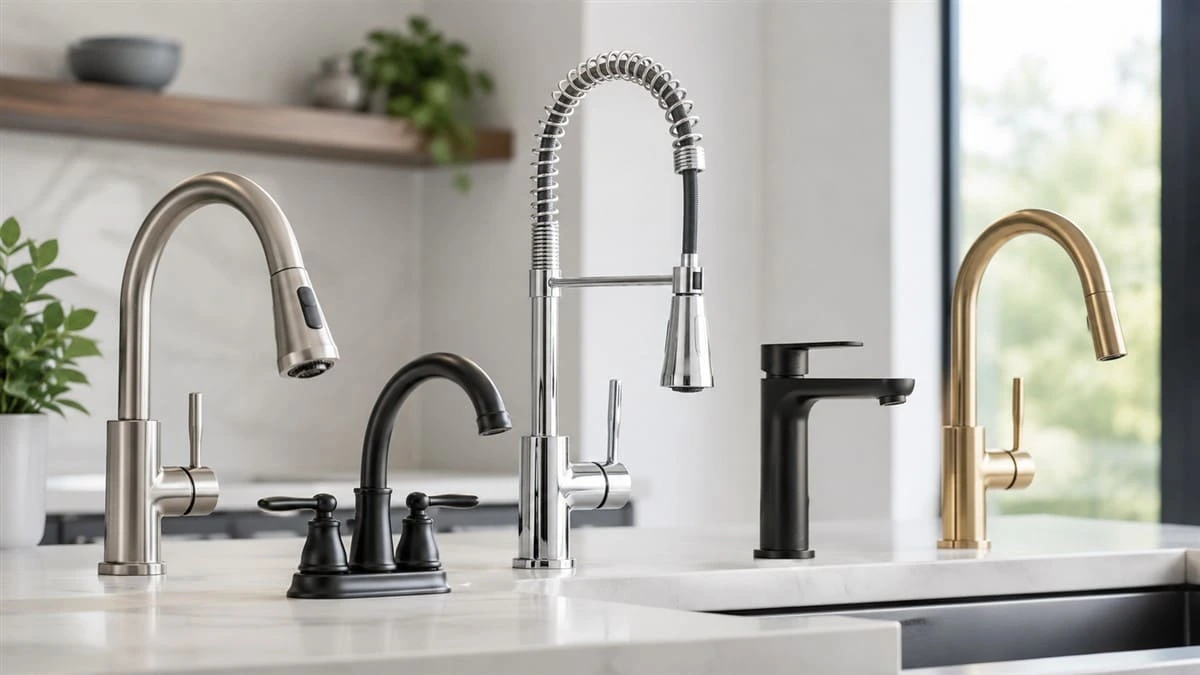
Table of Contents
Why Homeowners Replace Their Faucets
Many faucets provide dependable service for fifteen to twenty years or longer, but even quality fixtures eventually show signs of wear. Some homeowners replace a faucet because it has developed persistent leaks, while others simply want to modernize the appearance of their kitchen or bathroom.
Common reasons for replacing a faucet include:
- Persistent leaks
- Corrosion or worn finishes
- Difficult handle operation
- Water efficiency improvements
- Kitchen or bathroom remodeling
- Changing design preferences
- Upgrading to modern features
- Replacing an outdated fixture
Sometimes repairing an older faucet is still the most practical solution. However, when replacement parts become difficult to find or multiple components begin failing, installing a new faucet often provides better long-term value.
Start with Your Existing Sink
One of the biggest mistakes homeowners make is purchasing a faucet before determining whether it will fit their existing sink or countertop.
Before purchasing a faucet, it’s important to understand your sink’s mounting configuration and design. Our Sink Types Guide explains the most common sink styles and how they affect faucet compatibility.
Before shopping, identify:
- The number of mounting holes
- Hole spacing
- Sink material
- Countertop material
- Available clearance behind the sink
- Cabinet space beneath the sink
- Existing water supply connections
These measurements eliminate many incompatible options before you begin comparing styles.
Kitchen Faucet Styles
Kitchen faucets perform some of the hardest-working tasks in the home. Preparing meals, washing dishes, filling pots, and cleaning produce all place daily demands on the fixture.
Popular kitchen faucet styles include:
Pull-Down Faucets
Pull-down faucets feature a spray head that pulls directly downward into the sink. They provide excellent reach and are one of the most popular choices for modern kitchens.
Advantages include:
- Easy sink cleaning
- Flexible spray patterns
- Excellent for large sinks
- Convenient pot filling
Pull-Out Faucets
Pull-out faucets extend horizontally rather than downward. They work well where overhead cabinet clearance is limited and remain a popular option for smaller kitchens.
Single-Handle Faucets
Single-handle faucets control both water temperature and flow with one lever.
Benefits include:
- Easy one-handed operation
- Simple temperature adjustment
- Modern appearance
- Minimal countertop space required
Two-Handle Faucets
If you’re considering a traditional design, learn more about the advantages, styles, and applications of 2 Handle Faucets before making your decision.
Many homeowners appreciate:
- Traditional appearance
- Precise temperature control
- Timeless styling
- Compatibility with many classic kitchens
Commercial-Style Faucets
These taller faucets feature exposed spring designs inspired by restaurant kitchens.
They often include:
- High arc spouts
- Powerful spray functions
- Extended reach
- Contemporary appearance
While attractive, homeowners should verify adequate clearance beneath cabinets before selecting this style.
Bathroom Faucet Styles
Bathroom faucets are generally smaller than kitchen faucets but are available in an equally wide variety of styles.
Common options include:
- Centerset faucets
- Widespread faucets
- Single-hole faucets
- Wall-mounted faucets
- Vessel sink faucets
Choosing the correct configuration depends primarily on your vanity and sink design.
Laundry and Utility Faucets
Laundry rooms, garages, and utility sinks typically prioritize durability over decorative appearance.
Features worth considering include:
- High spout clearance
- Heavy-duty construction
- Simple operation
- Durable finishes
- Easy maintenance
These faucets are designed to withstand frequent use while accommodating larger buckets and cleaning equipment.
Choosing the Right Finish
Finish selection affects both appearance and maintenance.
Popular choices include:
- Chrome
- Brushed nickel
- Matte black
- Stainless steel
- Oil-rubbed bronze
- Polished nickel
Some finishes better conceal fingerprints and water spots than others. In areas with hard water, finishes that hide mineral spotting often require less frequent cleaning to maintain their appearance.
Features Worth Considering
Modern faucets offer a variety of convenience features.
Depending on your needs, you may want to consider:
- Pull-down sprayers
- Pull-out sprayers
- Magnetic docking systems
- Touchless activation
- Touch activation
- Multiple spray modes
- Pause functions
- High-arc spouts
- Swivel spouts
While these features improve convenience, selecting a quality faucet with reliable internal components remains more important than choosing the longest feature list.
Water Efficiency
Many modern faucets are designed to reduce water consumption without sacrificing performance.
Water-efficient faucets often include aerators that maintain strong water flow while using less water. This can help reduce utility costs while supporting water conservation efforts.
For many homeowners, upgrading from an older faucet also provides noticeable improvements in spray performance and overall usability.
Faucet Quality Matters More Than Brand Names
Many homeowners begin shopping by looking for a particular brand. While reputable manufacturers generally offer dependable products, the quality of a faucet depends on more than the name printed on the box.
Construction materials, internal components, warranty support, and long-term parts availability all contribute to a faucet’s overall value.
When comparing faucets, consider:
- Solid brass or stainless steel construction
- Durable ceramic disc cartridges
- Quality mounting hardware
- Readily available replacement parts
- Manufacturer warranty
- Long-term reputation for reliability
A less expensive faucet may appear nearly identical to a premium model, but differences inside the faucet often determine how well it performs after years of daily use. Choosing a well-built faucet can reduce future repairs and provide smoother operation throughout its service life.
Understanding Faucet Compatibility
Even the highest-quality faucet won’t perform properly if it isn’t compatible with your existing sink or countertop. Compatibility is one of the most important considerations when selecting a replacement faucet.
Before purchasing a faucet, professionals typically verify several factors to ensure the installation goes smoothly.
Number of Mounting Holes
Sinks and countertops are manufactured with different hole configurations. Common layouts include:
- Single-hole
- Three-hole
- Four-hole
Some faucets include decorative escutcheon plates that allow a single-hole faucet to cover additional unused mounting holes, while others require a specific hole pattern. Verifying compatibility beforehand helps avoid unexpected surprises during installation.
Sink and Countertop Material
Installation methods can vary depending on whether the faucet is mounted to:
- Stainless steel sinks
- Cast iron sinks
- Composite sinks
- Quartz countertops
- Granite countertops
- Solid surface countertops
Some materials require additional care during installation to prevent damage to finished surfaces.
Spout Reach and Height
A faucet should comfortably reach the center of the sink basin without causing excessive splashing.
Likewise, taller faucets should provide enough clearance beneath cabinets, shelves, or windows located behind the sink.
Proper proportions improve both appearance and everyday usability.
Supply Connections
Most modern faucets include flexible supply lines, but connection types and lengths can vary.
During replacement, professionals also inspect existing supply lines for signs of wear, corrosion, or deterioration. Replacing aging supply lines during faucet installation is often inexpensive insurance against future leaks.
Don’t Overlook the Shutoff Valves
Although homeowners usually focus on the faucet itself, the shutoff valves beneath the sink deserve equal attention. These small valves control the hot and cold water supply whenever repairs or maintenance are needed.
In older homes throughout Clovis and Fresno, it’s common to find shutoff valves that:
- No longer close completely
- Leak around the valve stem
- Have become difficult to operate
- Show signs of corrosion or mineral buildup
If a shutoff valve fails during faucet replacement, completing the installation safely may require replacing the valve first.
Evaluating these components while the faucet is already being replaced can prevent additional service calls later.
Hard Water Can Affect Faucet Performance
Homes throughout much of the Central Valley experience moderately hard to very hard water. Over time, dissolved minerals can accumulate inside faucets and around moving components.
Common effects include:
- Mineral deposits around the aerator
- Reduced water flow
- Stiff handles
- White calcium buildup
- Spray pattern problems
- Premature wear of internal components
While no faucet is completely immune to hard water, quality faucets with durable ceramic cartridges and corrosion-resistant finishes generally provide better long-term performance.
Periodic cleaning of the aerator and routine maintenance can also help extend the life of your faucet.
Buying a Faucet for a Remodeling Project
If you’re remodeling a kitchen or bathroom, faucet selection should be coordinated with the overall design rather than treated as a last-minute purchase. Our Kitchen & Bathroom Remodeling service can help ensure your plumbing fixtures, sink, cabinetry, and countertops all work together.
Several components work together, including:
- Sink
- Countertop
- Backsplash
- Cabinetry
- Plumbing rough-in
- Accessories
- Lighting
Selecting the faucet early in the remodeling process helps ensure all components complement one another and reduces the likelihood of compatibility issues later.
This is especially important when installing farmhouse sinks, vessel sinks, wall-mounted faucets, or custom countertops.
Should You Supply Your Own Faucet?
Many homeowners prefer purchasing their own faucet, while others appreciate recommendations from their plumber.
Either approach can work well.
If you decide to purchase your own faucet, consider:
- Verifying compatibility before buying
- Confirming all required parts are included
- Choosing a reputable manufacturer
- Avoiding discontinued models with limited parts availability
- Keeping your receipt and warranty information
If you’re unsure which faucet best fits your installation, consulting with your plumber before making a purchase can help eliminate guesswork.
Professional Installation Protects Your Investment
Installing a faucet involves much more than tightening a few connections.
Professional installation includes carefully removing the existing fixture, preparing the mounting surface, inspecting related plumbing components, properly securing the new faucet, reconnecting the water supply, testing for leaks, and confirming everything operates correctly before the job is complete.
During installation, experienced plumbers often identify issues that homeowners may not notice, including deteriorated shutoff valves, worn supply lines, damaged mounting hardware, loose sink fasteners, or early signs of water damage beneath the cabinet.
Addressing these concerns while the faucet is already being replaced is typically easier and more economical than waiting until a larger plumbing problem develops.
A properly installed faucet should operate smoothly, remain securely mounted, provide consistent water flow, and deliver years of dependable service.
Choose the Right Faucet with Confidence
Buying a new faucet doesn’t have to be overwhelming. By understanding your existing plumbing, considering compatibility before purchasing, and focusing on quality rather than appearance alone, you can choose a fixture that provides dependable performance for many years.
Whether you’re updating a kitchen, remodeling a bathroom, replacing a worn-out fixture, or simply looking for guidance before making a purchase, taking the time to select the right faucet helps ensure a smoother installation and a better long-term investment.
When you’re ready to install your new faucet, Clovis Plumbing Services provides professional faucet installation throughout Clovis, Fresno, and surrounding Central Valley communities. We’ll verify compatibility, inspect the related plumbing components, and complete the installation with the attention to detail that helps prevent leaks and ensures reliable performance for years to come.
See why homeowners throughout Clovis and Fresno trust us for professional faucet installations. Read our customer reviews on Google.
Frequently Asked Questions
How long should a quality faucet last?
A well-built residential faucet often lasts fifteen to twenty years or longer, depending on water quality, usage, maintenance, and the quality of its internal components.
Should I replace or repair my faucet?
Minor problems such as worn cartridges or seals can often be repaired. However, if the faucet has multiple issues, replacement parts are unavailable, or the fixture is nearing the end of its service life, replacement is frequently the more practical long-term solution.
Will any faucet fit my sink?
No. Faucet compatibility depends on the number of mounting holes, hole spacing, available clearance, sink dimensions, countertop configuration, and plumbing connections.
Is a more expensive faucet always better?
Not necessarily. Price alone doesn’t determine quality. Construction materials, ceramic cartridges, warranty support, and long-term parts availability are often better indicators of value.
Can I purchase my own faucet?
Yes. Many homeowners purchase their own faucets. It’s a good idea to verify compatibility before buying to avoid delays or additional installation costs.
Should shutoff valves be replaced during faucet installation?
Not always, but they should be inspected. If the valves no longer operate properly or show signs of leakage or corrosion, replacement may be recommended while the plumbing is already accessible.
What faucet finish requires the least maintenance?
Brushed nickel and stainless steel finishes generally hide fingerprints, water spots, and mineral deposits better than highly polished finishes, making them popular choices in areas with hard water.
Do you install customer-supplied faucets?
Yes. Clovis Plumbing Services installs customer-supplied faucets after confirming they are compatible with the existing sink, countertop, and plumbing system.