Replacing a faucet is one of the simplest ways to update the appearance and functionality of your home. While single-handle faucets have become increasingly popular, two-handle faucets continue to be a preferred option for many homeowners because they offer timeless styling and separate control of hot and cold water.
Available in both kitchen and bathroom designs, two-handle faucets complement everything from historic homes to modern farmhouse kitchens. They’re available in centerset, widespread, bridge, and wall-mounted configurations, with finishes ranging from polished chrome to matte black and brushed nickel.
Before purchasing a replacement, however, it’s important to understand whether a two-handle faucet is compatible with your existing sink or countertop. Mounting-hole configuration, spout reach, handle spacing, and available clearance all influence which models will fit your installation.
If you’re still deciding between different faucet styles, our Faucet Buying Guide compares today’s most popular kitchen, bathroom, laundry, and utility faucets to help you select the best option for your home.
Whether you’re replacing a leaking faucet, remodeling your kitchen, or updating a bathroom vanity, understanding how two-handle faucets differ from other styles will help you make a confident purchasing decision.
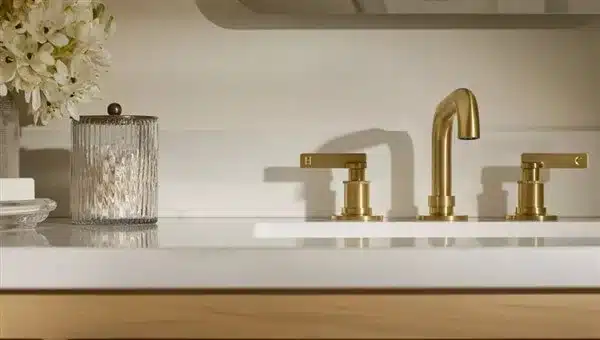
Table of Contents
What Is a Two-Handle Faucet?
As the name suggests, a two-handle faucet uses separate controls for hot and cold water. Each handle operates its own valve, allowing homeowners to adjust water temperature more precisely than many single-handle designs.
Most two-handle faucets include:
- A center spout
- Separate hot and cold handles
- Individual cartridges or valve assemblies
- Flexible supply connections
- A deck-mounted or wall-mounted installation
Turning both handles allows the hot and cold water streams to mix before leaving the spout. Because each water supply is controlled independently, many homeowners appreciate the ability to make small temperature adjustments rather than relying on a single mixing lever.
Although two-handle faucets are often associated with traditional kitchens and bathrooms, today’s manufacturers offer contemporary designs that pair clean lines with modern finishes and water-saving technology.
Why Homeowners Choose Two-Handle Faucets
Despite the popularity of single-handle faucets, two-handle models continue to offer several practical advantages.
Many homeowners choose them because they provide:
- Precise hot and cold water adjustment
- Traditional, transitional, and farmhouse styling
- Familiar operation
- A balanced, symmetrical appearance
- Availability in many decorative finishes
- Long-term reliability when properly maintained
Some homeowners also appreciate that each handle operates independently. If one cartridge eventually wears out, repairs are often limited to the affected side rather than replacing the entire mixing mechanism.
In addition, two-handle faucets complement many remodeling projects involving classic cabinetry, natural stone countertops, apron-front sinks, and vintage-inspired fixtures.
Kitchen Two-Handle Faucets
Two-handle kitchen faucets remain a popular choice for homeowners who prefer traditional styling or want greater control over water temperature. While they may not offer the convenience of one-handed operation found with single-handle models, they provide a balanced appearance that complements many classic, farmhouse, and transitional kitchens.
Modern kitchen two-handle faucets are available with high-arc spouts, side sprayers, pull-out accessories, bridge configurations, and a wide variety of decorative finishes. Many newer models also include ceramic disc cartridges that provide smoother operation and longer service life than older compression-style faucets.
When selecting a replacement, homeowners should verify that the faucet is compatible with the existing sink or countertop. Mounting-hole configuration is especially important because many kitchen sinks are manufactured with three or four faucet holes, while others are designed for a single-hole installation.
If you’re replacing an older kitchen faucet, our Kitchen Faucet Replacement guide explains when replacement makes more sense than repair, while our Kitchen Faucet Installation guide covers what to expect during the installation process.
Bathroom Two-Handle Faucets
Two-handle faucets are especially common in bathrooms, where they continue to be one of the most versatile faucet styles available. From compact powder rooms to spacious primary bathrooms, they complement a wide range of vanity designs and decorative themes.
Unlike kitchen faucets, bathroom faucets are available in several mounting configurations that determine how the faucet installs on the sink or countertop.
Common bathroom options include:
- Centerset faucets
- Mini widespread faucets
- Widespread faucets
- Wall-mounted faucets
- Bridge-style faucets
- Vessel sink faucets with separate handles
The correct choice depends on your vanity, sink, countertop, and existing hole spacing. Before purchasing a replacement faucet, it’s important to identify the number of mounting holes and verify the manufacturer’s installation requirements.
If you’re unsure which sink configuration you have, our Sink Types Guide explains the most common sink styles and how they affect faucet compatibility.
Centerset vs. Widespread Two-Handle Faucets
Although both styles use separate hot and cold handles, centerset and widespread faucets are constructed differently.
Centerset Faucets
Centerset faucets are one integrated assembly. The handles and spout are mounted to a single base designed for three holes spaced four inches apart.
Advantages include:
- Compact design
- Easier installation
- Lower overall cost
- Ideal for smaller bathroom vanities
Because everything is connected, centerset faucets are often quicker to install and require less countertop space.
Widespread Faucets
Widespread faucets use three independent components:
- Hot-water handle
- Cold-water handle
- Center spout
The spacing between components can often be adjusted, making widespread faucets popular for larger bathroom vanities and custom countertops.
Many homeowners choose widespread faucets because they provide:
- More upscale appearance
- Greater design flexibility
- Larger handle spacing
- Better proportions on wide vanities
Although installation is slightly more involved than a centerset faucet, widespread models remain one of the most popular choices for bathroom remodels.
Bridge Faucets
Bridge faucets combine traditional styling with modern reliability. Instead of concealing the water supply beneath the sink, the hot and cold supplies are connected by an exposed horizontal bridge above the countertop.
This distinctive appearance makes bridge faucets especially popular in:
- Farmhouse kitchens
- Cottage-style homes
- Vintage-inspired remodels
- Traditional kitchens
Many bridge faucets feature high-arc spouts that provide generous clearance for washing large pots and pans while serving as a decorative focal point above the sink.
Because bridge faucets typically require a three-hole installation with specific spacing, compatibility should always be verified before purchasing.
Mounting Hole Compatibility
One of the most common mistakes homeowners make is purchasing a faucet before confirming it will fit their existing sink or countertop.
Before buying a two-handle faucet, verify:
- Number of mounting holes
- Hole spacing
- Sink material
- Countertop material
- Spout reach
- Available backsplash clearance
- Water supply connections
Many older sinks already have three mounting holes that easily accommodate a two-handle faucet. Others may require an escutcheon plate or modifications if changing from a different faucet style.
If you’re remodeling your kitchen or bathroom, coordinating your faucet selection with the sink and countertop early in the project helps prevent compatibility issues and installation delays. Our Kitchen & Bathroom Remodeling service can help ensure all plumbing fixtures work together as intended.
Choosing the Right Finish
The finish you choose affects both appearance and maintenance.
Popular options include:
- Chrome
- Brushed nickel
- Stainless steel
- Matte black
- Oil-rubbed bronze
- Polished nickel
In the Central Valley, where hard water is common, brushed nickel and stainless steel finishes are often popular because they help conceal fingerprints, water spots, and mineral deposits better than highly polished finishes.
While appearance is important, choosing a faucet with durable internal components is even more critical for long-term reliability. Ceramic disc cartridges, solid brass construction, and quality mounting hardware often have a greater impact on performance than the finish alone.
Repair or Replace?
A leaking two-handle faucet doesn’t always need to be replaced. Many common problems are caused by worn cartridges, valve stems, O-rings, seats, springs, or aerators that can often be repaired without replacing the entire fixture.
Common signs that a repair may be sufficient include:
- A slow drip from the spout
- A leak around one handle
- Reduced water flow
- Mineral buildup on the aerator
- A handle that’s become difficult to turn
However, replacement is often the better long-term investment when:
- The faucet is heavily corroded
- Replacement parts are no longer available
- Multiple components have failed
- The finish is badly worn or peeling
- The faucet no longer matches a remodeled kitchen or bathroom
- You want improved functionality or water efficiency
Many older two-handle faucets have provided decades of dependable service, but newer models typically offer smoother ceramic disc cartridges, improved sealing technology, and more durable finishes. If you’re already replacing countertops or sinks, installing a new faucet at the same time can also help avoid future labor costs.
Hard Water Can Affect Two-Handle Faucets
Homes throughout Clovis, Fresno, and much of the Central Valley are supplied with moderately hard to very hard water. Over time, dissolved minerals such as calcium and magnesium can accumulate inside faucets and around moving parts, affecting both appearance and performance.
Common hard water issues include:
- White mineral deposits around the base of the spout
- Calcium buildup on the aerator
- Reduced water flow
- Stiff or difficult-to-turn handles
- Water spots on decorative finishes
- Premature wear of internal cartridges
Because a two-handle faucet has separate hot and cold cartridges, mineral buildup can sometimes affect one side more than the other. Homeowners may notice one handle becoming harder to operate or one side delivering less water than the other.
Routine maintenance can help extend the life of your faucet. Periodically cleaning the aerator, removing mineral deposits, and replacing worn cartridges when needed can restore performance and prevent more costly repairs.
When purchasing a replacement faucet, choosing one with ceramic disc cartridges and corrosion-resistant materials generally provides better long-term reliability in hard water conditions.
Professional Faucet Installation Protects Your Investment
Installing a two-handle faucet involves more than connecting a few water lines. Proper installation helps ensure the faucet remains securely mounted, operates smoothly, and provides years of leak-free performance.
A professional installation typically includes:
- Removing the existing faucet
- Cleaning the mounting surface
- Verifying sink and countertop compatibility
- Installing the new faucet according to manufacturer specifications
- Connecting the hot and cold water supplies
- Inspecting the shutoff valves
- Replacing worn supply lines when needed
- Testing for leaks
- Confirming proper water flow and temperature control
During the installation, plumbers often identify other issues hidden beneath the sink, such as deteriorated shutoff valves, corroded supply lines, loose sink fasteners, or signs of previous water damage. Addressing these concerns while the faucet is already removed is usually more convenient and cost-effective than scheduling another service visit later.
Whether you’re replacing an aging bathroom faucet or upgrading your kitchen, professional Faucet Installation helps protect your investment and provides confidence that everything is operating as intended.
Choosing the Right Two-Handle Faucet
A quality two-handle faucet can provide decades of dependable performance while enhancing the appearance of your kitchen or bathroom. The key is selecting a model that’s compatible with your sink, complements your home’s style, and is built with durable internal components.
Before making your purchase, consider:
- Your existing mounting-hole configuration
- Kitchen or bathroom application
- Centerset, widespread, or bridge design
- Spout height and reach
- Desired finish
- Ceramic disc cartridges
- Warranty coverage
- Availability of replacement parts
If you’re still comparing faucet styles, our Faucet Buying Guide provides a comprehensive overview of today’s most popular kitchen, bathroom, laundry, and utility faucets, helping you choose the best option for your home.
When it’s time to install your new faucet, Clovis Plumbing Services provides professional Faucet Installation throughout Clovis, Fresno, and surrounding Central Valley communities. We’ll verify compatibility, inspect the existing plumbing, and complete the installation with the attention to detail that helps prevent leaks and ensures reliable long-term performance.
See why homeowners throughout Clovis and Fresno trust us for professional faucet installations. Read our customer reviews on Google.
Frequently Asked Questions
Are two-handle faucets better than single-handle faucets?
Neither style is universally better. Two-handle faucets provide precise hot and cold water control and a traditional appearance, while single-handle faucets offer convenient one-handed operation and a more contemporary design.
Will a two-handle faucet fit any sink?
No. Compatibility depends on the number of mounting holes, hole spacing, sink design, countertop configuration, and available clearance. Always verify these measurements before purchasing a replacement faucet.
What’s the difference between a centerset and a widespread faucet?
A centerset faucet combines the spout and handles into one assembly designed for three holes spaced four inches apart. A widespread faucet uses three separate components, allowing greater flexibility in handle spacing and creating a more upscale appearance.
Can a leaking two-handle faucet be repaired?
Often, yes. Replacing worn cartridges, valve stems, O-rings, or aerators can resolve many common leaks. If multiple components have failed or replacement parts are unavailable, installing a new faucet may be the better long-term solution.
Which finish requires the least maintenance?
Brushed nickel and stainless steel finishes generally hide fingerprints, water spots, and mineral deposits better than polished finishes, making them popular choices in areas with hard water.
How long should a quality two-handle faucet last?
A well-built faucet with ceramic disc cartridges often provides fifteen to twenty years or more of reliable service, depending on water quality, maintenance, and daily use.
Do you install customer-supplied faucets?
Yes. Clovis Plumbing Services installs customer-supplied faucets after confirming they are compatible with the existing sink, countertop, and plumbing system.
Should shutoff valves be replaced during faucet installation?
Not always, but they should always be inspected. If they leak, no longer operate properly, or show signs of corrosion, replacing them during faucet installation can help prevent future plumbing problems.