Standby generators can place a substantial demand on a home’s natural gas system because they may need to operate continuously during an extended power outage. The amount of fuel required depends on the generator selected, its rated output, and the manufacturer’s specifications. That makes generator fuel demand one of the first considerations when evaluating how the equipment will fit into an existing residential gas system.
The generator is also only one part of the overall demand. A home may already have a furnace, water heater, range, dryer, fireplace, pool heater, or other gas appliances operating from the same supply. Those existing loads remain important when a generator is added because the gas system may need to support multiple appliances during the same period.
Distance can also affect the project. Standby generators are typically installed outdoors in a location that satisfies equipment and site requirements, and that location may be some distance from the home’s existing gas supply. The developed piping length between the available supply and the generator therefore becomes another factor when the overall gas demand is evaluated.
Future appliance plans are worth considering at the same time. A homeowner who expects to add a tankless water heater, outdoor kitchen, pool heater, or other gas equipment can provide that information before the generator project is finalized. Considering known future demand early can provide a more complete picture of how the property may ultimately use natural gas.
Homeowners do not need to calculate these requirements themselves. Our Gas Line Installation service addresses the professional sizing, routing, testing, permitting, and code-compliance considerations involved when residential gas piping is installed.
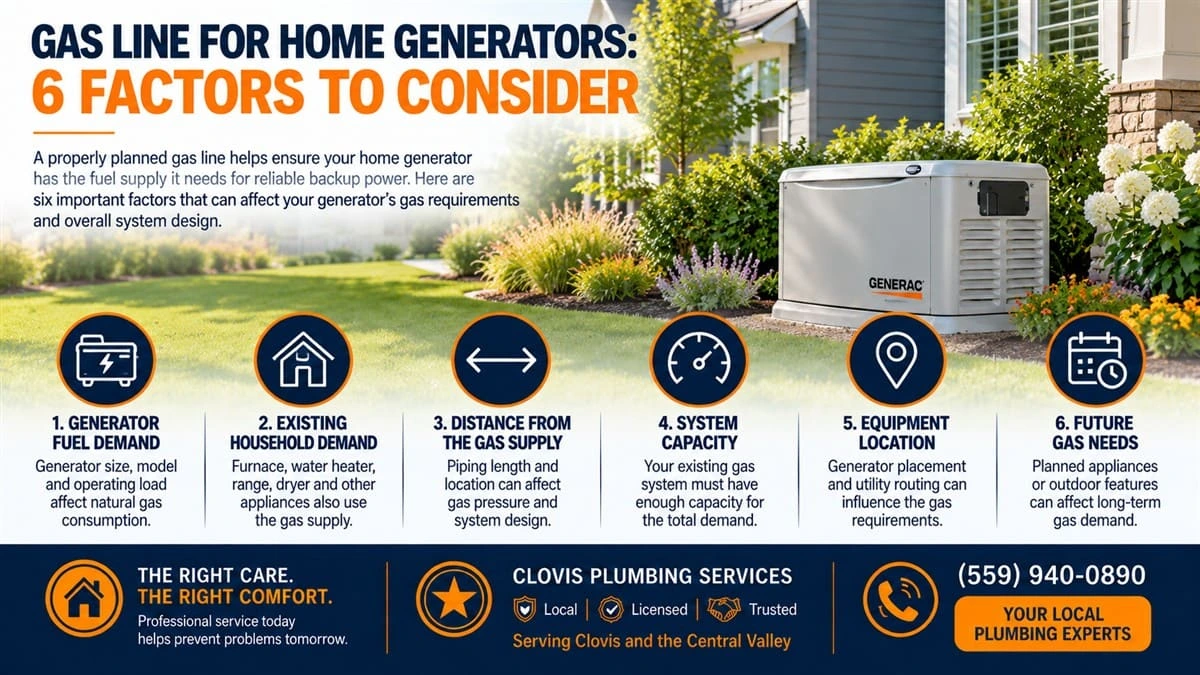
Table of Contents
1. Generator Fuel Demand
The first factor to identify is the fuel requirement of the actual generator being considered. Standby generators are available in different capacities, and their natural-gas consumption can vary substantially depending on the model and operating load.
Rather than estimating requirements from generator size alone, homeowners should obtain the manufacturer’s specifications for the proposed equipment. Those specifications give the contractors involved in the project a defined starting point for evaluating the fuel supply instead of designing around an assumed generator.
The intended fuel should also be confirmed. Some standby generators can operate on natural gas or propane, but the manufacturer’s fuel requirements differ depending on the configuration. Knowing which fuel will be used is therefore part of establishing the generator’s actual requirements.
2. Existing Household Gas Demand
A standby generator does not operate independently from the home’s other gas appliances. During an outage, a furnace, water heater, range, dryer, fireplace, or other equipment may continue using natural gas at the same time the generator is operating.
This makes combined demand more useful than looking at the generator by itself. A home with relatively modest existing gas use presents different conditions from a property already serving several high-demand appliances.
A tankless water heater is a good example because its firing rate can represent a substantial gas demand while hot water is being used. Homeowners who have this equipment, or expect to add it, can learn more about the related fuel requirements in our guide to a gas line for a tankless water heater.
3. Distance From the Gas Supply
The proposed generator location matters because gas must be delivered from the available supply to the equipment while meeting the generator manufacturer’s requirements. A unit located relatively close to the home’s gas service presents different conditions from one positioned farther across the property.
As distance increases, the relationship between fuel demand, piping length, system configuration, and available pressure becomes increasingly important. This is why the presence of an existing gas line near the proposed generator does not, by itself, establish that the available supply is appropriate.
Homeowners should establish the likely generator location early enough for the gas requirements to be evaluated alongside the electrical and equipment requirements. Coordinating these decisions before the location becomes fixed can help prevent different portions of the project from being planned around conflicting assumptions.
4. Available Gas System Capacity
An existing residential gas system was generally designed around the appliances and demand anticipated when the home was constructed or when the system was subsequently modified. Adding a standby generator can significantly change the total demand the system may need to support.
Available capacity depends on more than one component. Existing piping, developed length, system configuration, appliance demand, supply conditions, and the requirements of the proposed generator can all be relevant when determining what the system can accommodate.
This becomes particularly important when a property already has another high-demand outdoor appliance. A gas line for pool heaters can represent a substantial additional load, so a home with both a pool heater and standby generator should have those demands considered as part of the overall system rather than evaluating either appliance in isolation.
5. Generator Location and Utility Routing
Choosing a generator location involves more than finding an open area beside the home. The location must coordinate with the other components of the generator project, which can include gas piping, electrical connections, transfer equipment, and requirements established by the equipment manufacturers and applicable standards.
Property conditions can also influence the available route. Concrete, walkways, landscaping, irrigation, structures, electrical equipment, and other existing improvements may occupy the area between the gas supply and the proposed generator location.
These conditions are easier to address while the generator location is still being evaluated. Once concrete, landscaping, fencing, or other permanent improvements have been completed around a predetermined location, utility-routing options may become more limited or disruptive.
6. Future Changes in Gas Demand
A standby generator can remain in service for many years, while the appliances and outdoor features around the home may change considerably during that time. A conventional water heater could eventually be replaced with a tankless model, a pool heater could be added, or an outdoor cooking area could introduce additional gas demand.
This does not mean homeowners should plan around every hypothetical appliance they might someday purchase. It does mean that improvements already being considered should be discussed when the generator project is evaluated rather than treated as unrelated future projects.
An outdoor kitchen is one example where early coordination can be particularly useful. Built-in grills, side burners, pizza ovens, and other equipment may add meaningful gas demand, and our guide to a gas line for outdoor kitchen projects explains how appliance selection, total demand, distance, routing, and layout can affect that type of addition.
Does a Home Generator Need a Dedicated Gas Line?
A dedicated gas line should not be treated as a universal requirement for every standby generator. The appropriate configuration depends on the generator’s fuel requirements and the design, capacity, length, and arrangement of the home’s existing gas system.
In some projects, a separate run from an appropriate point in the system may be part of the design. In others, the existing configuration may provide different options. The important distinction is that the decision should follow an evaluation of the actual system rather than an assumption that every generator requires the same piping arrangement.
This is especially important when homeowners encounter generalized recommendations based only on generator size. Two homes using similar generators can have different gas-system conditions because their existing appliance loads, piping configurations, distances, and supply conditions are not necessarily the same.
Generator Size and Gas Demand Are Related, but Not Identical
Generator capacity is an important part of fuel planning, but electrical output should not be used as a substitute for the manufacturer’s fuel specifications. The amount of natural gas required can vary with the particular generator and its operating load.
Homeowners should therefore identify the proposed equipment before the gas requirements are finalized. If the generator has not yet been selected, planning can begin with expected electrical needs, but the final gas evaluation should use specifications for the actual equipment that will be installed.
This coordination also helps keep the electrical and plumbing portions of the project aligned. The generator contractor can establish the equipment and backup-power requirements while the gas system can be evaluated using the resulting fuel specifications.
Existing Gas-Line Conditions Should Be Addressed Separately
Planning for a generator may reveal an issue involving the existing gas system rather than simply a question of accommodating additional demand. An existing piping problem should be evaluated on its own merits before new equipment is added.
Symptoms or known problems involving existing gas piping should not be treated as part of routine generator planning. When an existing system requires diagnosis or corrective work, our Gas Line Repair service addresses gas-line conditions requiring professional evaluation and repair.
Preparing for a Standby Generator in Clovis
Homeowners can make the planning process more productive by identifying the generator being considered, obtaining its fuel specifications, establishing a likely equipment location, and making a list of the gas appliances already serving the property. Those details provide a much stronger starting point than trying to determine a pipe size or routing arrangement independently.
It is also useful to identify significant gas appliances already planned for the property. A future tankless water heater, pool heater, outdoor kitchen, or other substantial addition can change the broader demand that the home’s gas system may eventually need to accommodate.
The objective is to understand the generator as one part of the home’s overall gas demand. Generator requirements, existing appliances, distance, system capacity, equipment location, and known future changes all contribute to that evaluation while leaving the actual installation design to the professionals responsible for the work.
To see recent work completed by Clovis Plumbing Services and feedback from local customers, visit our Google Business Profile.
FAQs: Gas Line for Home Generators
Does a standby generator always need a dedicated gas line?
Not necessarily. The appropriate gas-supply configuration depends on the generator’s fuel requirements, the existing piping system, available capacity, distance, household appliance demand, and other project conditions. A dedicated run may be appropriate in some installations, but it should not be treated as a universal requirement.
How do I know whether my existing gas system can support a standby generator?
The existing system needs to be evaluated using the generator’s fuel requirements along with the demand from other gas appliances. Pipe sizing, developed length, system configuration, available capacity, and supply conditions can all affect whether modifications are necessary.
Why does the distance to a standby generator matter?
Distance can affect how the gas supply must be planned because piping length, generator demand, system configuration, and available pressure are related. A generator located farther from the gas supply can present different requirements from similar equipment positioned much closer to it.
Should I choose the generator before planning its gas supply?
Homeowners should at least identify the proposed generator and obtain its manufacturer specifications before the gas requirements are finalized. Different generator models can have substantially different fuel demands, so accurate equipment information is important when the system is evaluated.
Can future gas appliances affect generator planning?
Yes. Known plans for high-demand equipment such as a tankless water heater, pool heater, or additional outdoor gas appliances should be discussed during the generator project. Future equipment can change the broader demand that the home’s gas system may eventually need to support.