- Accurate Leak Isolation Before Wall or Floor Access: Pressure testing, fixture isolation, and moisture tracing help narrow down the affected section before unnecessary drywall, flooring, or cabinet removal begins.
- Material-Specific Repair for Copper and PEX Systems: Repair methods are selected based on pipe material, fitting condition, and installation layout to support compatible, code-conscious connections.
- Correction of Failing Fittings, Valves, and Water Line Connections: Leaks around shutoffs, supply lines, manifolds, and transition fittings are repaired or replaced to stop active water intrusion and restore normal operation.
- Evaluation of Water Pressure and System Stress Conditions: Excessive pressure, thermal expansion, and unsupported piping can contribute to recurring leaks and premature fitting failure over time.
- Post-Repair Testing and Moisture Verification: Repaired sections are tested for leaks and surrounding areas are checked for remaining moisture before the work area is cleaned and returned to service.
- Scheduled Evaluation Based on Leak Severity and Access Needs: Appointment planning considers active water intrusion, shutoff requirements, wall or ceiling access, and whether the affected plumbing is exposed or concealed.
- Clear Identification of the Leak Source Before Repairs Begin: Diagnostic testing helps determine whether the issue involves supply lines, drain piping, fixture connections, slab plumbing, or localized fitting failure.
- Repair Options Based on Pipe Material and System Condition: Recommendations may involve localized repair, section replacement, rerouting, or fitting upgrades depending on accessibility and overall pipe condition.
- Explanation of Expected Access, Downtime, and Work Areas: Homeowners receive clear information about water shutoffs, affected rooms, drywall access, crawlspace entry, or other conditions that may impact the repair process.
- Pressure Testing and Cleanup After Repairs Are Completed: Repaired sections are checked for leaks, surrounding moisture conditions are reviewed, and the work area is cleaned before the plumbing system is returned to service.
| Had an emergency in the garage, hot water heater was leaking. I called Clovis Plumbing Services and they weren’t able to get someone out soon enough but was extremely helpful and gave me two other places to call. Thankfully one was able to come out within 20 minutes with the part and was able to do the repair quickly! I appreciate the fact that even though they couldn’t do it they were so helpful and helped us avoid a lot more damage! |
Rhonda O.
See our latest 5-star reviews and project photos on our Google Business Profile.
Table of Contents
Introduction
Residential plumbing leaks are not always obvious at the beginning. In many Clovis homes, the first signs appear as warm flooring, faint drywall staining, fluctuating water pressure, soft cabinet bases, or moisture collecting near baseboards rather than visible pipe failure. Locating the affected section often requires separating fixture-related issues from active supply line leaks, drainage seepage, or slab plumbing conditions before any repair decisions are made. Plumbing work performed in California must follow standards established by the California Plumbing Code, while local permit requirements may also involve review through the City of Clovis Building Division. Water efficiency recommendations published through EPA WaterSense also influence modern plumbing fixture and piping standards.
Leak repair conditions vary significantly depending on pipe material, installation era, access limitations, and the location of the affected line. Some properties contain aging copper systems routed through attics or crawlspaces, while others rely on manifold-style PEX layouts hidden behind finished walls. Slab foundations common throughout Clovis can further complicate detection because active water movement may travel underneath flooring before moisture becomes visible inside the home. Separating the actual leak source from secondary moisture spread is often one of the most important parts of the evaluation process.
Common Signs This Service Is Needed
Leak conditions inside residential plumbing systems often create indirect symptoms before active dripping becomes visible. Homeowners sometimes notice a gradual increase in water usage without changes in household demand. Others begin investigating after hearing water movement inside walls while fixtures are off or finding isolated moisture appearing repeatedly in the same area.
Flooring changes are another common indicator. Wood laminate may begin separating near seams, tile grout can discolor unexpectedly, and vinyl flooring occasionally develops soft or uneven spots when moisture remains trapped underneath for extended periods. In slab homes, warm areas beneath finished flooring sometimes point toward pressurized hot water line leakage below the foundation.
Cabinet interiors frequently reveal early warning signs as well. Sink bases exposed to long-term seepage may swell, darken, or develop persistent odors caused by hidden moisture accumulation. Some fixture leaks remain confined to localized supply connections, while others migrate into wall cavities before becoming noticeable from outside surfaces.
Pressure irregularities can also signal underlying plumbing issues. Fixtures that pulse briefly during operation, fluctuating shower temperatures, or sudden reductions in flow occasionally indicate hidden supply-side leakage affecting overall system balance.
Local Factors That Affect This Service in Clovis
Housing construction throughout Clovis spans several decades, and plumbing configurations vary considerably between neighborhoods. Older properties may still contain galvanized piping, early-generation copper installations, or mixed-material repairs completed over time. Newer developments more commonly use PEX distribution systems routed through attics, interior walls, or centralized manifolds.
Regional water conditions also influence plumbing wear patterns. Hard water exposure contributes to mineral accumulation inside valves, fixture cartridges, and threaded connections. Over time, scale buildup can increase restriction, place additional stress on fittings, and accelerate deterioration around aging joints.
Foundation style changes repair planning as well. Raised-floor homes typically allow easier access beneath the structure, while slab-on-grade construction often limits direct visibility into underground supply routing. When slab-related leaks occur, confirming the exact location may involve isolation testing, thermal tracing, or rerouting evaluation before demolition is considered.
Attic-installed piping systems present another local consideration. During warmer months, elevated attic temperatures create expansion and contraction cycles that place repeated stress on unsupported tubing and fittings. Homes with older attic copper lines occasionally develop pinhole failures or fitting separation after years of thermal movement.
What This Service Typically Addresses
Residential leak repair work covers a wide range of plumbing conditions rather than one specific problem. Some repairs involve fixture-related supply lines beneath sinks, behind toilets, or near shutoff valves. Others center on concealed piping routed through ceilings, utility chases, crawlspaces, or slab foundations.
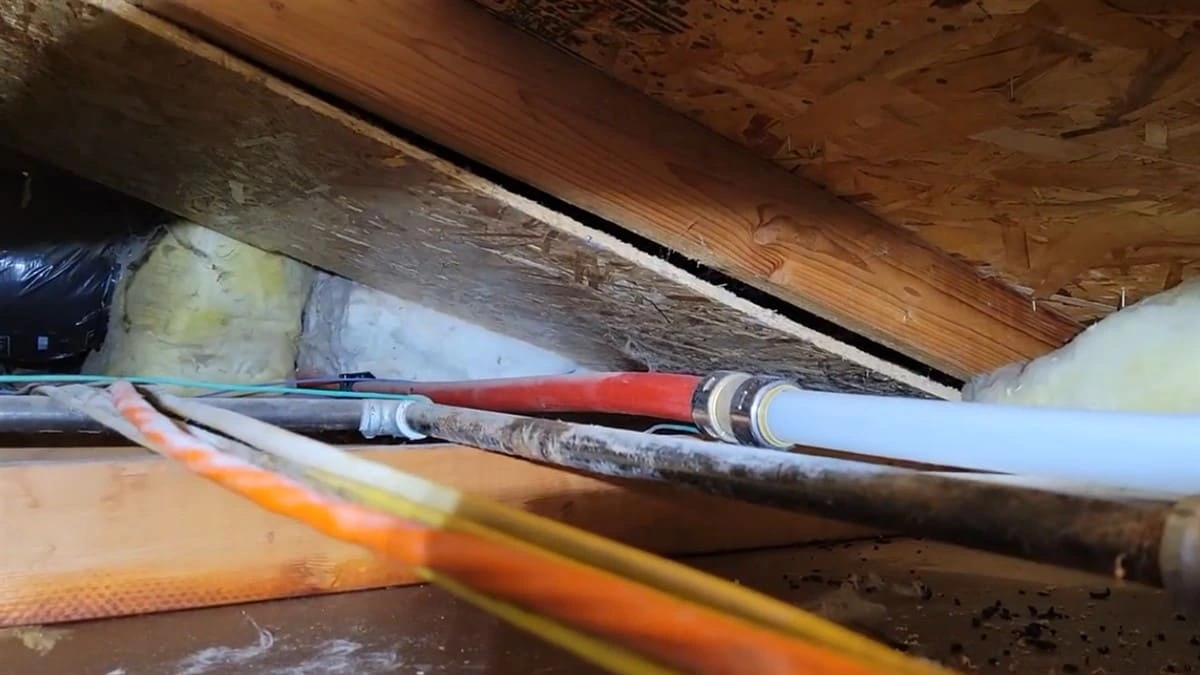
Water distribution systems made from copper frequently develop issues near soldered joints, directional changes, or unsupported spans exposed to long-term vibration. PEX systems can experience failures around fittings, expansion rings, manifold connections, or improperly supported sections subjected to stress movement over time.
Drainage leaks differ from pressurized supply leaks because they often develop gradually and may only release water while fixtures are actively used. Shower drains, bathtub overflows, kitchen waste assemblies, and washing machine standpipes are common areas where hidden drainage seepage appears.
Exterior service line conditions are sometimes involved as well. Underground water line leaks between the meter and home can create unexplained saturation, pressure changes, or continuous meter movement even when fixtures remain off. In situations involving larger underground distribution concerns, homeowners occasionally require professional water line repair services to address damaged exterior piping safely.
What to Expect During a Service Visit
Service visits generally begin with symptom review before tools are used. Understanding where moisture appears, how long conditions have existed, and whether water usage patterns have changed helps narrow down possible causes before invasive access is considered.
Testing methods vary depending on the suspected leak location. Fixture isolation, pressure checks, moisture meters, and thermal imaging may all be used during the evaluation process. In homes with multiple plumbing modifications completed over the years, tracing line routing sometimes becomes necessary before accurate repair planning can occur.
Once the affected section is identified, repair access is evaluated carefully. Controlled drywall removal may be required in wall cavities, while attic or crawlspace entry is sometimes the safer option depending on how the system was originally installed.
Material compatibility becomes important during the repair stage. Copper, CPVC, galvanized piping, and PEX systems all require different connection methods, support standards, and transition fittings. When larger sections show repeated deterioration, homeowners may also discuss whether broader PEX pipe replacement or rerouting would reduce future failure risk more effectively than repeated spot repairs.
Cost Factors That Can Change the Final Price
Leak repair pricing depends heavily on accessibility, piping material, and how far moisture has spread before discovery. Two leaks producing similar symptoms can involve very different repair conditions once the affected area is opened.
Fixture-accessible repairs beneath sinks or inside exposed utility spaces are generally less labor-intensive than slab-related repairs hidden beneath finished flooring. Ceiling access, tile removal, crawlspace limitations, and attic routing can all influence labor time substantially.
Pipe material also affects repair complexity. Copper systems may require cutting, cleaning, solder preparation, and heat protection procedures. PEX repairs involve different fitting systems and expansion or crimping tools depending on the manufacturer and existing installation method.
Secondary moisture damage can increase project scope as well. Saturated drywall, damaged cabinetry, deteriorated flooring materials, and insulation replacement sometimes become part of the overall restoration process once the plumbing issue is resolved.
Repair vs. Replacement
Not every plumbing leak automatically means the entire system requires replacement. In many homes, isolated failures can be corrected successfully without broader reconstruction. Determining whether repair or replacement makes more sense depends on the condition of the surrounding piping and the pattern of previous failures.
A single damaged fitting inside an otherwise stable plumbing system may only require localized correction. Repeated leaks occurring in multiple areas over a short period often indicate broader material deterioration instead of isolated failure.
Pipe age matters, but installation quality matters just as much. Some older copper systems continue performing reliably for decades when properly supported and maintained. On the other hand, poorly routed or improperly secured piping may develop recurring problems much earlier than expected.
Homeowners comparing long-term options sometimes review broader residential plumbing service solutions when deciding whether repeated leak repairs or larger piping upgrades make better financial sense over time.
Access, Timing, and Household Disruption
Repair timelines vary depending on how quickly the leak source can be isolated and whether structural access is required. Some problems are identified and corrected within a single visit, while concealed leaks behind finished surfaces occasionally require staged scheduling.
Water shutoffs are sometimes limited to isolated fixtures, but larger supply repairs may temporarily affect multiple areas of the home during active work. Families with attic-installed water lines or slab plumbing often experience different access conditions than homes with raised foundations and exposed crawlspace piping.
Noise, drying equipment, or temporary access openings may also become part of the process when moisture has spread into surrounding materials. Coordinating repairs early usually reduces overall disruption because prolonged exposure allows water migration into larger structural areas.
Experienced planning helps minimize unnecessary demolition whenever possible. Controlled access targeting the confirmed leak area is generally preferred over broad exploratory removal.
When Professional Evaluation Matters
Hidden plumbing leaks can mimic other household issues, which is why accurate diagnosis matters before repairs begin. Moisture near flooring may originate from supply piping, drainage seepage, appliance discharge, roofing intrusion, or condensation conditions depending on the location.
Repeated cosmetic repairs without identifying the actual moisture source often lead to recurring damage. Fresh paint, cabinet replacement, or flooring installation rarely solve the underlying problem when active plumbing leakage remains inside the structure.
Evaluation becomes especially important when leaks involve slab foundations, multiple moisture locations, or recurring pressure fluctuations. Isolating the affected section correctly helps avoid unnecessary repairs while reducing the chance of reopening finished surfaces later.
Homeowners dealing with unexplained moisture conditions generally benefit from addressing the source sooner rather than waiting for visible structural deterioration to expand further.
Why Experience and Licensing Matter
Leak repair work often involves more than replacing a damaged section of pipe. Understanding how residential plumbing systems were originally routed, supported, transitioned, and modified over time affects how repairs should be approached safely.
Clovis Plumbing Services operates as a father-and-daughter plumbing team rather than a rotating subcontractor model. Calls go directly to the people performing the work, which allows communication about access conditions, repair limitations, and scheduling to remain consistent from beginning to end.
The company carries California Contractor License C-36 Plumbing #1014216 along with $2,000,000 General Liability coverage and active Workers’ Compensation insurance. Combined field experience includes decades spent working with residential water distribution systems, fixture installations, reroutes, and concealed leak repairs throughout Central California homes.
Experience also matters during diagnosis. Distinguishing between isolated fitting failure, pressure-related stress, slab movement, and long-term material deterioration often changes the repair strategy entirely.
When to Schedule Service Confidently
Moisture conditions rarely improve on their own once active plumbing leakage begins. Staining, recurring odors, flooring movement, or unexplained water usage generally indicate that further evaluation is warranted before surrounding materials deteriorate further.
Some homeowners schedule service immediately after visible water appears, while others investigate after noticing subtle changes developing slowly over time. Either situation benefits from understanding where the moisture is originating before larger repairs become necessary.
If conditions inside the home suggest hidden plumbing leakage, scheduling a professional inspection can help clarify whether the issue involves a localized repair, aging supply lines, drainage seepage, or broader system-related concerns.
Frequently Asked Questions
Can slab leaks spread moisture beyond the actual pipe location?
Yes. Water traveling beneath a slab foundation often moves along soil, vapor barriers, or concrete channels before becoming visible inside the home. This means flooring damage or moisture staining may appear several feet away from the actual leak source, which is why accurate isolation testing is important before access or repairs begin.
Why do some plumbing leaks return after previous repairs?
Recurring leaks sometimes indicate broader issues beyond the original repair area. Excessive water pressure, pipe movement, aging materials, unsupported lines, or mixed fitting types can continue stressing nearby sections even after one leak has been repaired successfully.
Is pressure testing always part of leak diagnosis?
Pressure testing is commonly used when evaluating supply-side plumbing leaks, especially when moisture is hidden behind walls, beneath flooring, or under slab foundations. Isolating pressure loss helps narrow down affected sections before unnecessary demolition or exploratory access is performed.
Can hard water contribute to plumbing leak problems?
Yes. Mineral buildup from hard water can gradually affect valves, threaded fittings, fixture cartridges, and pipe interiors. Over time, scale accumulation may increase stress on aging plumbing components and contribute to leakage around weakened connections.
Will the home’s water need to be shut off during repairs?
Temporary shutoffs are common during active plumbing repairs, although the affected area depends on how the system is routed. Some localized repairs only affect individual fixtures, while larger supply line repairs may require temporary interruption to multiple parts of the home.