Pfister is a long-established manufacturer of kitchen and bathroom faucets, with products ranging from conventional single- and two-handle fixtures to pull-down kitchen faucets and electronically controlled models.
Choosing a Pfister faucet, however, involves more than selecting a style or finish. The fixture still needs to fit the sink or countertop, provide the functionality you need, use serviceable components, and remain practical to maintain as it ages.
This guide explains Pfister kitchen and bathroom faucets, common configurations, valve and cartridge considerations, features, repair options, replacement parts, installation requirements, and what homeowners should evaluate before purchasing one.
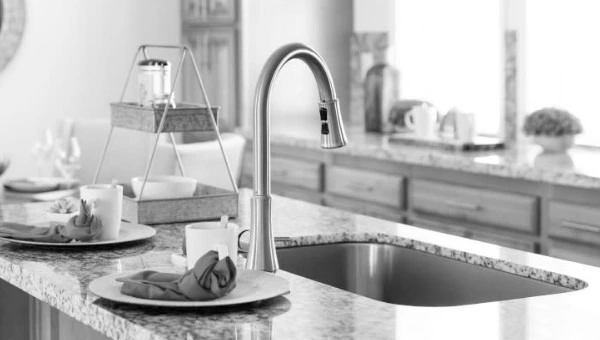
Table of Contents
Are Pfister Faucets a Good Choice?
For many homeowners, Pfister faucets are worth considering because the company offers a broad selection of residential kitchen and bathroom fixtures in different configurations, finishes, and feature levels.
One of the most important considerations when evaluating any faucet manufacturer is serviceability. Cartridges, seals, aerators, spray heads, hoses, handles, and other components can eventually require attention, even when the faucet itself remains in good condition.
Being able to identify the fixture and obtain appropriate replacement components can make repairing an existing faucet considerably more practical.
Brand is only one part of the purchasing decision. Our Faucet Buying Guide explains the broader factors homeowners should consider when comparing faucet configurations, materials, finishes, features, mounting requirements, and overall quality.
Pfister Kitchen Faucets
Pfister manufactures kitchen faucets ranging from relatively simple single-handle fixtures to pull-down and electronically controlled models.
Common configurations include:
- Single-handle faucets
- Two-handle faucets
- Pull-down faucets
- Pull-out faucets
- High-arc faucets
- Bar and prep faucets
- Touchless faucets
- Faucets with multiple spray functions
The best configuration depends on the sink, mounting holes, countertop design, available cabinet space, and how the faucet will be used.
Pull-Down Kitchen Faucets
Pull-down faucets are popular in modern kitchens because the spray head extends directly from the faucet spout, providing additional flexibility for rinsing dishes, washing produce, cleaning the sink, and filling cookware.
Depending on the model, Pfister pull-down faucets may incorporate different spray functions, hose configurations, and docking designs.
Features can improve convenience, but the fundamentals still matter. Homeowners should evaluate:
- Spout height
- Spout reach
- Spray-hose length
- Under-sink clearance
- Spray-head docking
- Available mounting space
- Replacement-part availability
A feature-rich faucet that does not fit the sink or available space is still the wrong faucet for the installation.
Touchless Pfister Faucets
Pfister also offers touchless kitchen faucets using electronic sensor technology.
Unlike a conventional mechanical faucet, a touchless model may include control components, electronic valves, sensors, batteries, power supplies, or other components beneath the sink.
Before purchasing one, consider:
- Available cabinet space
- Power requirements
- Sensor placement and operation
- Control-component location
- Spray-hose clearance
- Access for future service
- Electronic-component warranty coverage
Touchless operation can be convenient, particularly while preparing food or working with messy hands, but the additional components also make proper installation and future serviceability more important.
Pfister Bathroom Faucets
Pfister bathroom faucets are available in several common mounting and handle configurations.
These include:
- Single-handle faucets
- Two-handle faucets
- Centerset faucets
- Widespread faucets
- High-arc faucets
- Low-arc faucets
- Traditional designs
- Contemporary designs
The existing sink or countertop configuration should be identified before purchasing a replacement.
Centerset faucets typically combine the spout and handles into one assembly designed for closely spaced mounting holes. Widespread faucets use three separate components, allowing greater flexibility in the spacing between the hot and cold handles and the faucet spout.
Homeowners considering separate hot and cold water controls can learn more about these configurations in our 2 Handle Faucets guide.
Understanding Pfister Faucet Cartridges
The cartridge is one of the most important serviceable components inside a faucet.
Depending on the design, the cartridge controls water flow, temperature mixing, or both. As internal components wear, symptoms can include:
- Dripping from the spout
- Leakage around the handle
- Difficult handle movement
- Inconsistent temperature control
- Difficulty shutting the water off completely
Pfister has used different cartridge and valve designs across its faucet lines and applications, including ceramic-disc designs in many fixtures.
This means homeowners should not assume every Pfister faucet uses the same cartridge.
Correctly identifying the faucet or existing cartridge before purchasing replacement parts is important. Installing an incorrect cartridge can waste time and may create additional problems without resolving the original leak.
Common Pfister Faucet Problems
Like any plumbing fixture containing moving and sealing components, Pfister faucets can develop problems from normal wear, mineral buildup, water conditions, age, or deterioration of individual parts.
Common symptoms include:
- Dripping from the spout
- Leakage around the handle
- Stiff handle movement
- Loose handles
- Reduced water flow
- Clogged aerators
- Irregular spray patterns
- Pull-down or pull-out hose leaks
- Spray-head docking problems
- Loose faucet mounting
- Deteriorated supply connections
- Sensor or electronic problems on equipped models
These symptoms do not automatically mean the entire faucet needs replacement.
A faucet that drips from the spout, for example, may simply have a worn cartridge, seal, or another serviceable internal component. When the fixture remains in otherwise good condition and appropriate parts are available, professional Faucet Repair may restore normal operation without replacing the complete faucet.
Repairing vs. Replacing a Pfister Faucet
One advantage of a serviceable faucet is that the entire fixture does not necessarily need to be replaced when an individual component begins to wear.
Repair may make sense when:
- The faucet body remains in good condition
- The finish remains acceptable
- The problem can be isolated to a replaceable component
- Correct replacement parts are available
- The faucet is securely mounted
- The fixture still meets the homeowner’s needs
Replacement may make more sense when:
- Problems repeatedly return
- Several components are deteriorating
- The faucet body is corroded or damaged
- The finish is badly deteriorated
- Required parts are unavailable
- Repair costs are becoming excessive
- Electronic components make repair impractical
- The faucet no longer provides the desired functionality
- The sink or countertop is also being replaced
The age of the faucet alone should not determine the decision. Overall condition, repairability, replacement-part availability, previous repairs, and the cost of additional work should all be considered.
For kitchen fixtures, our Kitchen Faucet Replacement guide explains the broader factors involved in deciding when replacing an aging faucet makes more sense than continuing to repair it.
Pfister Replacement Parts and Product Support
Replacement-part availability can have a significant effect on the useful life of a faucet.
Depending on the model, serviceable Pfister components may include:
- Cartridges
- Aerators
- Handles
- Spray heads
- Pull-down and pull-out hoses
- Seals
- Mounting components
- Electronic components
Availability varies by faucet model and age, so identifying the exact fixture is important before ordering parts.
When possible, homeowners should retain the model information, installation instructions, and purchase documentation for a new faucet. Having that information available several years later can make identifying appropriate replacement components considerably easier.
Pfister Faucet Finishes
Pfister faucets are offered in numerous finishes depending on the collection and model.
Common options can include:
- Chrome
- Stainless-style finishes
- Brushed nickel
- Matte black
- Bronze-toned finishes
- Gold-toned finishes
- Collection-specific decorative finishes
Finish selection affects both appearance and maintenance.
Polished finishes may show fingerprints and water spots more readily, while brushed or matte finishes can make everyday spotting less noticeable.
This can be particularly useful in areas where hard water leaves visible mineral deposits around faucets and sinks.
Regardless of finish, homeowners should follow the manufacturer’s cleaning recommendations. Abrasive cleaners, harsh chemicals, or inappropriate cleaning tools can damage decorative finishes and shorten their useful appearance.
What to Check Before Buying a Pfister Faucet
A well-built faucet can still be incompatible with a particular sink or countertop.
Before purchasing a Pfister faucet, verify:
- Number of mounting holes
- Mounting-hole spacing
- Sink or countertop thickness
- Spout height
- Spout reach
- Handle clearance
- Backsplash clearance
- Window or shelf clearance
- Water-supply connection requirements
- Pull-down hose clearance
- Space beneath the sink
- Power requirements for electronic models
- Included mounting hardware and accessories
These measurements are particularly important when replacing an existing faucet because the new fixture needs to work with an installation that is already established.
Do not assume that a faucet will fit simply because the previous fixture was also a Pfister or because both faucets are described as kitchen or bathroom models.
Pfister Faucet Installation Considerations
Installing a replacement faucet involves more than attaching the fixture to the sink and connecting two water lines.
The surrounding plumbing should also be evaluated.
Before installation, accessible components should be checked for conditions that could affect the reliability of the new faucet.
Shutoff Valves
Hot and cold shutoff valves must be operated during faucet replacement.
Older valves may fail to close completely, leak when disturbed, become difficult to operate, or show visible corrosion. A deteriorated shutoff valve should be addressed rather than depending on it beneath a newly installed faucet.
Water Supply Lines
Flexible water connectors should be inspected for:
- Corrosion
- Damaged fittings
- Deteriorated seals
- Kinks
- Abrasion
- Signs of previous leakage
- Excessive age or wear
Questionable connectors can become the weak point in an otherwise new installation.
Mounting Surface
The sink or countertop around the faucet opening should be clean and structurally sound.
Old sealant, mineral deposits, corrosion, and debris may need to be removed before the new faucet is secured so the fixture sits properly against the mounting surface.
Under-Sink Clearance
Pull-down hoses, counterweights, control components, drain piping, garbage disposals, filtration equipment, and other components may occupy the same cabinet space.
The faucet must be installed so these components do not interfere with normal hose movement or future service access.
Our Kitchen Faucet Installation guide explains faucet compatibility, preparation, removal, mounting, supply connections, testing, and other installation considerations in greater detail.
Pfister Faucet Warranty Considerations
Warranty coverage is another factor worth reviewing before purchasing a faucet.
Coverage can vary according to the particular product, component, application, and purchaser. Mechanical components, finishes, and electronic components may not necessarily receive identical coverage.
For that reason, homeowners should review the warranty supplied with the specific faucet rather than relying solely on a general statement about the brand’s warranty.
It is also useful to retain:
- Purchase receipt
- Model number
- Installation documentation
- Warranty information
- Replacement-part information
These records can make future warranty questions, product identification, and repairs easier to resolve.
Are Pfister Faucets Worth Considering?
Pfister is worth considering for homeowners who want a widely available faucet brand with numerous kitchen and bathroom configurations, finishes, and feature levels.
Practical considerations can include:
- Broad residential product selection
- Multiple faucet configurations
- Numerous finishes and styles
- Conventional and electronic options
- Ceramic-disc valve options
- Replacement-part availability for many models
- Manufacturer support resources
- Wide retail availability
That does not mean every Pfister faucet is automatically the right choice.
The specific model matters more than the brand name alone. Construction, cartridge or valve design, features, dimensions, mounting requirements, serviceability, replacement-part availability, warranty, price, and compatibility with the existing plumbing should all be evaluated before purchasing.
Professional Pfister Faucet Installation in Clovis and Fresno
Clovis Plumbing Services installs customer-supplied Pfister faucets for homeowners throughout Clovis, Fresno, and surrounding Central Valley communities.
Before installation, we verify compatibility with the existing sink or countertop and inspect accessible shutoff valves, water supply lines, mounting conditions, and related plumbing components.
Whether you’re replacing an aging Pfister faucet, changing faucet configurations, or installing a new fixture during a kitchen or bathroom update, professional Faucet Installation helps ensure the faucet is securely mounted, properly connected, tested, and checked for leaks before being placed into service.
See our latest 5-star reviews and project photos on our Google Business Profile.
Frequently Asked Questions
Are Pfister faucets repairable?
Many Pfister faucets are repairable when the faucet body remains in good condition and the appropriate replacement components are available. Cartridges, aerators, hoses, spray heads, handles, and other parts may be serviceable depending on the model.
Do all Pfister faucets use the same cartridge?
No. Pfister uses different cartridge designs depending on the faucet model and application. The faucet and required replacement component should be correctly identified before ordering parts.
Is it better to repair or replace an older Pfister faucet?
Repair may be practical when the problem involves a replaceable component and the rest of the faucet remains in good condition. Replacement may make more sense when problems are recurring, several components are deteriorating, parts are difficult to obtain, or the faucet no longer meets the homeowner’s needs.
Does Pfister make touchless kitchen faucets?
Yes. Pfister offers touchless kitchen faucets using REACT sensor technology. These faucets incorporate electronic components in addition to conventional plumbing components, so installation requirements, power requirements, under-sink space, and future serviceability should be considered.
Can a Pfister faucet replace another brand?
Often, yes. Faucet compatibility is determined primarily by the sink or countertop mounting configuration, available clearance, connection requirements, and faucet dimensions rather than the brand of the previous fixture.
Can you install a customer-supplied Pfister faucet?
Yes. Clovis Plumbing Services installs customer-supplied Pfister faucets after confirming compatibility with the existing sink, countertop, and plumbing system.
Should shutoff valves and supply lines be inspected when installing a Pfister faucet?
Yes. Existing shutoff valves and water supply lines should be inspected whenever a faucet is replaced. Components that leak, no longer operate correctly, or show significant deterioration should be addressed before relying on them with the new fixture.
What should I check before purchasing a Pfister faucet?
Verify the mounting-hole configuration, hole spacing, countertop thickness, spout dimensions, handle clearance, supply connections, under-sink space, and any electrical or control-component requirements before purchasing the faucet.