Table of Contents
Why Plumbing is the Foundation of Your Kitchen Layout
When you begin a remodel, you are essentially drawing a map for how you will move through the space. In the world of kitchen design, this is often called the “Work Triangle,” which connects the stove, the refrigerator, and the sink. Because the sink requires fixed water lines and drainage, it is often the most difficult point of the triangle to move.
In many older homes in Clovis, plumbing was originally designed for simplicity rather than modern convenience. You might have a single drain line that isn’t sized for a high-powered dishwasher or a garbage disposal. When you decide to change the layout—perhaps moving the sink from under a window to a central island—you are doing more than moving a fixture; you are redesigning the entire hydraulic flow of the room.
The Role of Gravity and Venting
Plumbing relies on two main things: gravity and air. Water needs to flow downhill to get out of your house, and air needs to enter the system (through vents) to keep the water moving smoothly. When you change your kitchen design, your plumber must ensure that the new drain locations still have the proper “slope.” If a sink is moved too far from the main stack without adjusting the floor joists or wall pipes, you may end up with slow drains or frequent clogs.
Common Plumbing Design Choices and Their Impact
Every design choice you make has a ripple effect on your plumbing infrastructure. Here are a few common upgrades and how they change the requirements for your pipes:
- Kitchen Islands: Putting a sink or dishwasher in an island is a popular choice for open-concept homes. However, since there is no wall behind the sink, a special type of vent called an “island fixture vent” or an “air admittance valve” is often required to ensure the drain works correctly.
- Pot Fillers: These convenient faucets located over the stove require a cold water line to be run through the wall behind your range. This is a simple addition during the “rough-in” phase but can be very difficult to add once the tile backsplash is installed.
- High-End Refrigerators: Modern fridges often feature internal water dispensers and sophisticated ice makers. These require a dedicated water line and, in some cases, a floor drain or a recessed box in the wall to allow the fridge to sit flush against the cabinetry.
- Dual Sinks: Adding a secondary prep sink increases the demand on your water supply and requires a second drainage point. This may require upgrading the size of your main branch line to handle the extra volume.
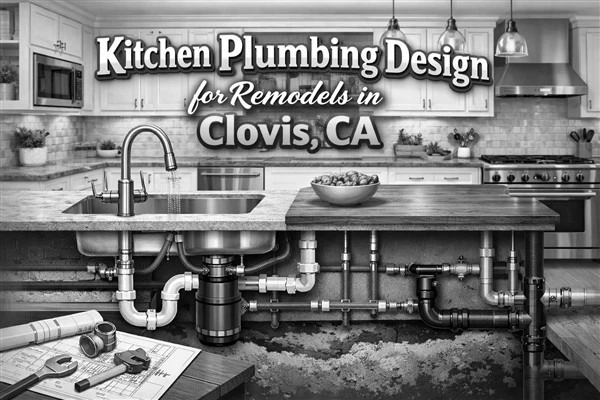
Understanding the “Rough-In” Phase
The “rough-in” is the stage of the remodel after the old kitchen is torn out but before the new cabinets and drywall go in. This is the most critical window for your plumbing design. During this time, the skeleton of your kitchen is exposed.
In Clovis, building codes require specific pipe materials and installation methods to ensure safety and longevity. For example, your plumber will check for proper bracing so that pipes don’t “clatter” when you turn the water on—a phenomenon known as water hammer. They will also ensure that hot and cold lines are properly spaced to prevent heat transfer, which can lead to “lukewarm” cold water.
Planning for the Long Term
A good plumbing design doesn’t just look at where the sink is today; it looks at how the system will perform ten years from now. This includes choosing durable materials like PEX or copper for supply lines and high-quality PVC for drainage. It also means installing shut-off valves that are easy to reach in an emergency, rather than burying them behind a heavy appliance.
Navigating Local Requirements and Best Practices
Every city has its own nuances when it comes to construction. In our area, we often deal with hard water, which can cause mineral buildup inside pipes over time. A smart remodel design might include a dedicated spot for a water softener or a whole-home filtration system. This protects your investment by keeping your new faucets and appliances free from scale.
Additionally, local codes in California are strict regarding water efficiency. Your plumbing design must incorporate low-flow fixtures that meet state standards. While this helps conserve water, it also means your plumbing system needs to be designed to maintain adequate pressure even with these restricted flows.
Collaborating with the Right Team
Plumbing is not a DIY-friendly part of a major remodel. While a homeowner can certainly pick out a beautiful faucet, the engineering required to move a drain across a concrete slab or vent a sink in a kitchen island is complex.
When to Consult a Specialist
It is generally best to involve a plumbing expert during the design phase, long before the first cabinet is ordered. A professional can tell you if your dream layout is physically possible or if it will require expensive structural changes. For instance, if you live in a home with a concrete slab foundation, moving a drain involves cutting into the floor, which significantly changes the budget and timeline.
A professional plumber provides peace of mind by ensuring that every connection is leak-tested and every vent is positioned to prevent sewer gases from entering your home. They understand the specific soil conditions and water chemistry in the Central Valley, which influences how they secure pipes and choose fittings. To see how local experts approach these challenges, you can check out the latest photos and reviews on our Google Business Profile. This will give you a better sense of the standard of work expected for a successful kitchen renovation in our community.
Maximizing Functionality Through Smart Fixture Placement
The goal of your plumbing design is to make your life easier. This means thinking about how you actually use the kitchen.
- Dishwasher Placement: The dishwasher should almost always be right next to the sink. This simplifies the plumbing because they can share the same drain and water supply lines.
- Point-of-Use Water Heaters: If your kitchen is far away from your main water heater, it can take a long time for hot water to reach the tap. A plumbing design that includes a small electric water heater under the sink provides instant hot water and saves gallons of wasted water every year.
- Garbage Disposal Power: While it’s an electrical component, the disposal is a central part of your plumbing design. It requires a specific drain configuration to prevent food particles from backing up into the second bowl of a double sink.
Investing time in these details during the planning stage prevents the frustration of “wish I would have” once the project is finished. If you are looking for more detailed information on the technical side of these installations, you can explore our comprehensive guide on kitchen plumbing remodeling to help you prepare for your upcoming project.
Maintenance Considerations for New Layouts
Once your new plumbing design is in place, maintaining it is much easier if you have planned for accessibility. Your design should include:
- Accessible Cleanouts: These are access points in your drain lines that allow a plumber to clear a clog without tearing apart your new cabinetry.
- High-Quality Shut-off Valves: Using quarter-turn ball valves instead of old-fashioned compression valves makes it much easier to turn off the water if a leak occurs.
- Proper Drainage Slopes: Ensuring your designer and installer prioritize a 1/4-inch per foot slope on all horizontal drains will prevent the “slow sink” syndrome that plagues many poorly planned remodels.
By focusing on these foundational elements, you ensure that your kitchen plumbing remodel is not just a cosmetic upgrade, but a lasting improvement to the value and function of your Clovis home.
Frequently Asked Questions
Can I move my kitchen sink to a different wall?
Yes, you can move a sink, but it is often the most complex part of a remodel. It requires rerouting supply lines and ensuring the new drain has the proper downward slope to function. In Clovis homes with slab foundations, this may involve cutting into the concrete to lay new pipes.
Do I need a permit for kitchen plumbing changes?
In Clovis, CA, most significant plumbing changes, such as moving drains or adding new gas lines, require a permit. This ensures the work meets safety codes and is inspected by the city. Working with a licensed professional helps ensure that all paperwork and inspections are handled correctly for your project.
Why is my new kitchen sink draining slowly?
A slow drain in a new remodel is usually caused by improper venting or an insufficient slope in the drain pipe. If the air can’t get into the system, water won’t flow out smoothly. A professional assessment can determine if a vent was blocked or if the layout needs adjustment.
Should I replace my old pipes during a remodel?
If your kitchen walls are already open and your home has older galvanized steel or thin copper pipes, it is highly recommended to replace them with modern materials like PEX. This prevents future leaks from ruining your new cabinets and is much more cost-effective to do while the walls are down.