Table of Contents
Inspecting Existing Pipes Before Demo Starts
When homeowners think about a remodel, they often start with the “fun” stuff—backsplashes, cabinet colors, and high-end appliances. But in a kitchen, the plumbing is the foundation. One of the biggest mistakes is failing to look behind the walls before the project begins.
In many Clovis neighborhoods, especially those with homes built a few decades ago, the existing pipes might not be ready for modern high-pressure appliances or deep farmhouse sinks. If you don’t account for the “guts” of the system, you might find yourself ripping out beautiful new tile just to fix a venting issue or a slow drain that should have been addressed while the walls were open.
The Risks of Moving Your Kitchen Sink Layout
It is tempting to move the sink to a new island or the other side of the room to create a better “work triangle.” While this looks great on a floor plan, moving a sink involves more than just extending a water line. You also have to move the drain and the vent.
In Clovis, homes built on concrete slabs present a specific challenge. Moving a drain often requires cutting into the concrete floor, which adds significant time and cost to a project. If the new sink is too far from the main vent stack, you may encounter drainage issues where the water “glugs” or drains slowly because it isn’t getting enough air. Always ensure that your new layout respects the physics of gravity-fed drainage.
Matching Pipe Size to Modern Kitchen Fixtures
If you are upgrading to a high-capacity dishwasher or a commercial-style pot filler, your existing half-inch supply lines might not provide enough volume. Many homeowners overlook the “demand” of new fixtures.
Similarly, the drain size matters. A standard kitchen sink usually requires a 2-inch drain line. If your older home still uses 1.5-inch piping for the kitchen branch, you might experience frequent backups, especially if you install a high-horsepower garbage disposal. Upgrading these pipes while the cabinets are removed is a relatively small investment that prevents a lifetime of slow-moving water.
California Code: Why You Need a Dishwasher Air Gap
In California, plumbing codes have specific requirements for how dishwashers are vented to prevent “dirty” water from siphoning back into the clean dishes. Many DIY-ers or uncertified installers try to bypass the “air gap”—that small silver cylinder often seen next to the faucet—in favor of a “high loop” under the sink.
While high loops are common in other states, Clovis building inspectors generally look for a proper air gap during a remodel. Ignoring local codes can lead to failed inspections and issues when you eventually try to sell your home. It’s better to incorporate the air gap into your design from the start, perhaps choosing a finish that matches your faucet so it blends in seamlessly.
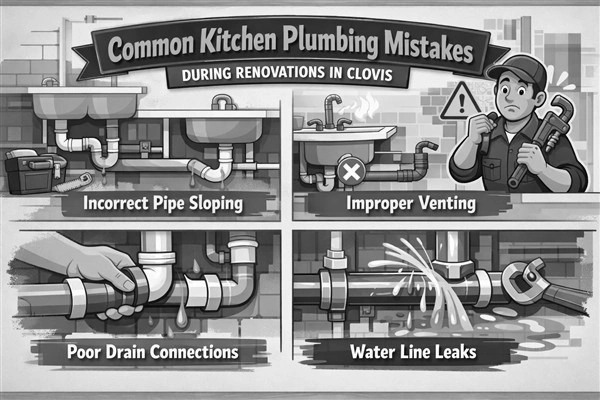
Preventing Sewer Odors with Proper Sink Venting
Every drain needs a vent. The vent allows air into the pipe so water can flow out smoothly, much like putting a hole in the top of a juice carton helps it pour. During renovations, homeowners sometimes remove walls that contain these vent pipes without realizing it.
If you are removing an upper soffit or a wall to create an open-concept kitchen, you must have a plan for rerouting the plumbing vents. Simply “capping” them off or using an illegal “cheater vent” (air admittance valve) in a way that doesn’t meet Clovis code can lead to sewer odors entering your kitchen. Proper venting ensures that the P-trap stays full of water, which acts as a seal against gasses from the sewer line.
Avoiding Drain Height Errors with Deep Sinks
Precision is everything in plumbing. A “rough-in” refers to the installation of pipes before the cabinets and finished walls are in place. A common mistake is not having the exact specifications of your new sink and cabinets before the pipes are positioned.
If the drain pipe coming out of the wall is too high, you won’t be able to install a deep farmhouse-style sink because the sink’s outlet will be lower than the wall’s drain entry. This creates a situation where water sits in the bottom of the sink constantly. Always provide your plumbing team with the “spec sheets” for your chosen fixtures before they begin the rough-in phase.
When to Consult a Professional for Your Remodel
While many parts of a kitchen remodel are great for DIY enthusiasts—like painting or installing tile—the plumbing involves hidden risks that aren’t always apparent until something goes wrong. Understanding the difference between a simple swap and a structural change is key. For example, replacing a faucet is straightforward, but reconfiguring the sub-floor drainage requires a deep understanding of local building codes and hydraulic pressure.
When you reach the stage of moving gas lines for a new range or rerouting vents through the roof, having a professional perspective ensures the work is permitted and safe. It provides peace of term knowing that your home is protected from water damage and that your renovation adds real, documented value to your property.
If you want to ensure your project meets all local standards and will stand the test of time, you can check out our local reviews and recent projects on our Google Business Profile to see how we help Clovis homeowners achieve their dream kitchens.
Best Piping Materials for Longevity and Safety
Not all pipes are created equal. While PVC and PEX are the modern standards for most residential projects, there are situations where copper is still the superior choice, especially for exposed lines or specific high-heat applications.
Using the wrong type of connector—such as joining copper directly to galvanized steel without a dielectric union—can cause “galvanic corrosion.” This is a chemical reaction that eats away at the metal, leading to a pinhole leak within just a few years. During a remodel, it’s vital to ensure all new materials are compatible with the existing plumbing in your Clovis home to avoid these “hidden” leaks.
Optimizing Water Flow with a Pro Plumbing Plan
Modern refrigerators often feature sophisticated water dispensers and ice makers. A common mistake is using a cheap “saddle valve” to tap into a nearby water line. These valves are notorious for leaking over time.
Instead, a proper remodel should include a dedicated “ice maker box” recessed into the wall with a high-quality shut-off valve. This allows the fridge to sit flush against the wall and provides a reliable connection. Similarly, if you plan on installing an under-sink reverse osmosis system, you need to account for the extra space required and the dedicated drain line these systems often need.
The Value of Professional Layout Design
A well-planned plumbing layout does more than just prevent leaks; it improves the “flow” of your kitchen. By ensuring that your hot water lines are insulated and that the layout minimizes the distance between the water heater and the kitchen, you can enjoy “instant” hot water at your sink. This type of efficiency is a hallmark of a high-quality remodel.
For more information on how to structure your overall project, visit our guide on Kitchen Plumbing Remodeling to see how various components work together.
Frequently Asked Questions
Can I move my kitchen sink to a kitchen island?
Yes, you can move a sink to an island, but it requires careful planning for the drain and vent. In Clovis homes built on slabs, this often involves trenching the concrete. You must also use a specific venting method, like an island fixture vent, to ensure proper drainage without a vertical pipe through the ceiling.
Do I need a permit for kitchen plumbing in Clovis?
Generally, if you are moving pipes, adding new fixtures, or changing the footprint of your plumbing, a permit from the City of Clovis is required. Simple “like-for-like” replacements, such as swapping an old faucet for a new one in the same spot, usually do not require one, but major renovations always should.
Why does my new kitchen sink drain so slowly?
Slow drainage in a new sink is often caused by a venting issue or an incorrect “P-trap” height. If the wall drain is too high for a deep new sink, the water cannot flow out via gravity. It could also be that the vent was blocked or improperly rerouted during the wall construction.
Should I replace my old pipes during a remodel?
If your walls are open and your home has older galvanized steel or thin copper pipes, it is highly recommended to replace them with PEX or new copper. It is much more cost-effective to upgrade the plumbing while the cabinets are out than to wait for a leak to occur behind your brand-new kitchen.