Table of Contents
A plumbing remodel is one of the most important parts of any bathroom renovation. It’s mostly hidden behind walls and under floors, but it affects how your bathroom works every day—water pressure, drainage, noise, and long-term reliability.
This guide walks through the plumbing remodel process from rough-in to final fixtures, using clear language and real-world examples. If you’re planning a bathroom update in Clovis, CA, you’ll learn what happens at each stage, what decisions matter most, and when professional installation becomes the smart next step.
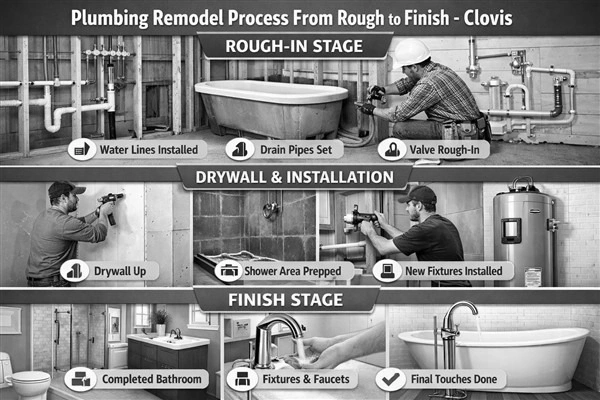
What “Rough to Finish” Really Means in Plumbing
When plumbers talk about a remodel “from rough to finish,” they’re describing two main phases:
- Rough-in plumbing – The behind-the-walls work: pipes, drains, vents, and shutoff valves
- Finish plumbing – The visible components: toilets, faucets, shower valves, tubs, and sinks
Between those phases, other trades step in—framers, electricians, tile setters—so the next 6 plumbing steps have to be planned carefully to avoid rework.
Planning the Layout Before Any Pipes Move
Before a single pipe is cut, the plumbing layout needs to be confirmed. This is where many remodels succeed—or struggle later.
Key questions answered at this stage include:
- Will the toilet, shower, or vanity move?
- Are you switching from a tub to a walk-in shower?
- Are you adding features like dual shower heads or a wall-mounted faucet?
- Is the existing drain size adequate for the new fixtures?
Why layout decisions matter
Moving fixtures usually means changing drain locations, which can affect floor framing and slab cutting. In many Clovis homes—especially older ones with slab foundations—this planning step helps avoid surprises once demolition begins.
Pro tip: Even small shifts, like moving a vanity a few inches, can change venting requirements. This is why layout planning happens before rough-in work.
Demolition and Exposure
Once the plan is set, the old bathroom is carefully opened up. This includes:
- Removing fixtures
- Opening walls where pipes run
- Exposing floors for drain access if needed
This stage often reveals what you’re really working with.
Common findings include:
- Older galvanized or cast iron pipes
- Previous DIY repairs
- Pipes that don’t meet current code
- Corrosion or restricted drain lines
None of this means the remodel is “in trouble.” It simply informs the scope of the rough-in work that follows.
Rough-In Plumbing (The Hidden Backbone)
Rough-in plumbing is the most technical part of the remodel. It’s also the stage inspectors focus on most closely.
What happens during rough-in
During this phase, plumbers install or modify:
- Water supply lines (hot and cold)
- Drain and waste lines
- Vent piping
- Shower valves and tub drains
- Toilet flanges
- Shutoff valves
Everything is positioned according to the approved layout and local code requirements.
Pressure and flow considerations
Modern bathrooms often use more water at once—rain shower heads, handheld sprayers, and body jets. Rough-in planning ensures the supply lines can handle that demand without pressure drops.
In Clovis-area homes, plumbers often upgrade older half-inch supply lines to support newer fixtures more effectively.
“The ‘rough-in’ phase is the most critical part of the project, as it involves installing everything behind the walls. Because this stage requires the most skilled labor, it typically accounts for the largest portion of your bathroom plumbing remodeling cost guide estimates.”
Plumbing Inspections and Code Approval
After rough-in is complete—but before walls are closed—an inspection is required.
Inspectors typically check:
- Proper pipe sizing
- Correct drain slopes
- Venting compliance
- Secure pipe supports
- Leak-free pressure testing
This step protects homeowners by confirming the system meets current standards before it’s hidden behind drywall and tile.
Why this matters: Fixing a rough-in issue after tile is installed is far more disruptive than addressing it now.
Wall Closure and Mid-Project Coordination
Once rough-in passes inspection, walls and floors are closed:
- Drywall is installed
- Waterproofing membranes are applied
- Tile work begins
At this point, plumbing pauses—but coordination continues. Shower valves, for example, must be set at the correct depth so finished trim sits flush later.
Good communication between trades here keeps the project moving smoothly.
Finish Plumbing Installation (The Fixtures)
After tile, cabinets, and paint are complete, the finish plumbing phase begins.
Fixtures installed during finish work
This stage includes installing and testing:
- Toilets
- Sink faucets
- Shower trim and heads
- Tub spouts
- Drain assemblies
- Supply lines and shutoff connections
Each fixture is sealed, aligned, and tested for leaks and proper operation.
Final adjustments
Small tweaks often happen here—adjusting water temperature limits, aligning fixtures visually, and confirming drainage flow. This is also when homeowners see the full result of their plumbing decisions.
“Once the fixtures are set and the system is pressure-tested, you’ll see the immediate upgrade in your home’s functionality. Beyond the aesthetics, investing in professional-grade execution at this stage is what truly determines if bathroom plumbing remodeling is worth it regarding long-term home value and leak prevention.”

Common Plumbing Upgrade Choices During a Remodel
Many homeowners choose to upgrade plumbing components while walls are open.
Popular options include:
- Pressure-balancing or thermostatic shower valves
- Quiet-fill toilets
- Water-saving fixtures
- Better-access shutoff valves
- Improved venting to reduce drain noise
These upgrades are easier—and often more cost-effective—during a remodel than later.
If you’re comparing upgrade paths or wondering how plumbing ties into the bigger remodel picture, this overview of bathroom plumbing remodeling provides helpful context on planning and installation considerations.
Local Plumbing Challenges for Clovis Homes
Plumbing remodels in Clovis come with a few local considerations that influence planning and execution.
- Housing age mix: Many neighborhoods include homes built decades apart, meaning pipe materials and layouts vary widely.
- Slab foundations: Common in the area, slab foundations can affect how drains are relocated.
- Water pressure variations: Local supply conditions can influence fixture performance.
- Code updates: Remodels must meet current California plumbing standards, even if the original system was installed under older rules.
Understanding these factors early helps avoid delays and change orders.
When It Makes Sense to Bring in a Professional Plumber
Some homeowners handle minor fixture swaps themselves, but a full plumbing remodel is a different category.
Professional installation is especially helpful when:
- Fixtures are moving locations
- Drains or vents are being modified
- Older piping materials are involved
- Inspections and permits are required
- You want long-term reliability, not temporary fixes
Licensed plumbers bring experience with local codes, inspection processes, and common issues found in Clovis-area homes. They also carry insurance and warranties that protect the investment you’re making in your remodel.
To see reviews and learn more about local plumbing experience, you can visit our Clovis plumbing service profile on Google to understand how professional support fits into a remodel of this size.
Final Walkthrough and System Testing
The last step is a full system check.
This includes:
- Running all fixtures together
- Checking for leaks at every connection
- Verifying proper drainage and venting
- Confirming water temperature and pressure
Once this is complete, the plumbing portion of the remodel is officially finished—and ready for everyday use.
Making Confident Decisions Before You Start
A plumbing remodel isn’t just about pipes. It’s about comfort, reliability, and avoiding problems years down the road.
Understanding the process from rough-in to finish helps you:
- Plan layouts more confidently
- Choose fixtures that work well together
- Know what questions to ask during the remodel
- Recognize when professional installation adds real value
FAQ’s About the Plumbing Remodel Process
What happens during rough-in plumbing in a remodel?
During rough-in, plumbers install water supply lines, drain pipes, vents, and valve placements before walls are closed. In Clovis, CA, this step must meet local code and pass inspection. Accurate rough-in work prevents leaks, poor water pressure, and costly changes later in the remodel process.
How long does a full plumbing remodel usually take?
Most plumbing remodels take one to three weeks, depending on layout changes and inspections. Older Clovis, CA homes may need extra time due to aging pipes or code updates. Scheduling inspections early and choosing fixtures ahead of time helps keep the project moving smoothly.
When are fixtures installed during the remodel process?
Fixtures like toilets, faucets, and showers are installed after drywall, tile, and finishes are complete. This protects them from damage and ensures proper alignment. In Clovis, CA, final fixture installation also includes testing water flow, drainage, and shutoff valves.
How can homeowners avoid plumbing issues after remodeling?
Homeowners can reduce problems by using licensed plumbers, approving layouts before rough-in, and choosing quality fixtures. In Clovis, CA, hard water makes regular aerator cleaning helpful. Keeping access panels and knowing shutoff locations also makes future maintenance easier.